Is a Hard or Soft Night Guard Better for Teeth Grinding?
Quick answer: A hard night guard may be recommended when a stable, adjustable biting surface is needed, particularly if substantial tooth wear or repeated appliance damage is a concern. A soft night guard may feel more comfortable initially and may suit some patients. Neither is automatically better for heavy grinding. The choice depends on your dental examination, appliance design, symptoms, and individual needs.
A dentist may recommend different appliances for two people who appear to have similar grinding habits. One person might have extensive tooth wear but no jaw pain. Another might have sensitive teeth, several crowns, or a history of discomfort with an appliance.
The material matters, but so do its thickness, coverage, retention, and how the opposing teeth contact the guard. Those details help determine whether an appliance is appropriate for an individual’s mouth.
Hard vs Soft Night Guards: Side-by-Side Comparison
The following table compares common characteristics of hard and soft dental night guards. These are general distinctions, not guarantees about every product or patient.
| Feature | Hard Night Guard | Soft Night Guard |
|---|---|---|
| Material | Rigid dental-grade resin or other hard polymer | Flexible, resilient dental-grade polymer |
| Initial feel | Firm and relatively inflexible | More flexible and cushioned |
| Wear resistance | May resist abrasion and deformation well, depending on the material and design | May develop indentations, tears, or wear with repeated heavy loading |
| Biting contacts | Can allow precise adjustment of the contact surfaces | May compress under pressure, affecting how contacts are maintained |
| Comfort | Some patients need time to adjust to the rigid feel | Some patients prefer the flexible feel |
| Suitability | Considered when a rigid, adjustable appliance is clinically appropriate | May be considered for selected patients who tolerate flexible materials |
| Professional follow-up | Fit, contact patterns, wear, and symptoms should be reviewed | Fit, material deformation, wear, and symptoms should be reviewed |
Important distinction: The material alone does not establish clinical effectiveness. A well-designed appliance must fit properly and be suitable for the patient’s dental condition. A hard guard that causes unwanted pressure is not automatically preferable to a well-fitted soft guard, and the reverse is also true.
What Is a Hard Night Guard?
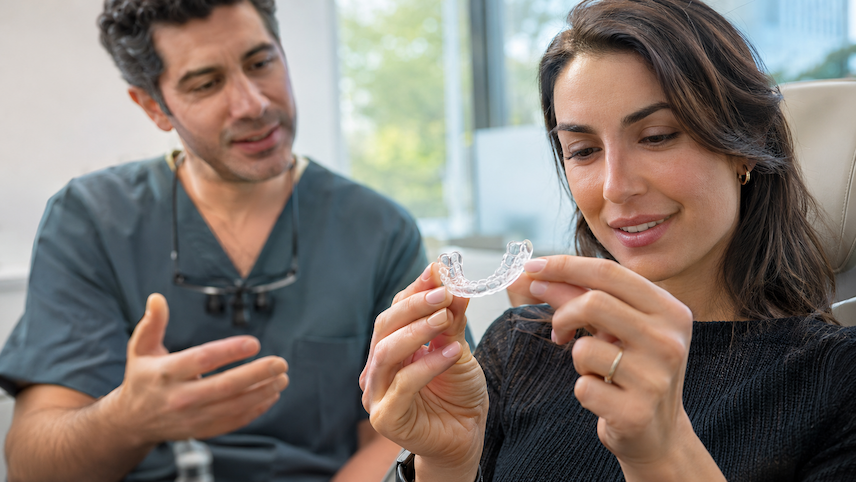
A hard night guard is a removable dental appliance made from a rigid material that maintains its shape under normal use. It is commonly designed to cover the biting surfaces of the upper or lower teeth.
Hard acrylic and other rigid dental resins are used in different types of occlusal splints. An occlusal splint is an appliance that separates or manages contact between the upper and lower teeth. The term describes the appliance’s purpose and design, not one specific material.
Why Might a Dentist Recommend a Hard Acrylic Night Guard?
Rigid materials provide a relatively stable surface that a dentist can evaluate and adjust. Depending on the design, this can be useful when controlling how the teeth contact the appliance is an important part of treatment planning.
Hard materials may also be selected when resistance to repeated wear is a priority. However, the service life of a guard depends on factors beyond hardness, including its thickness, fabrication method, the patient’s grinding activity, and maintenance.
Some people initially notice the firmness of a hard appliance more than they would a flexible one. A properly fitted guard should not create persistent tooth pressure, significant pain, or a lasting change in the way the teeth meet.
Are Hard Acrylic and Hard Plastic Night Guards Different?
The terms hard acrylic night guard and hard plastic night guard are sometimes used interchangeably, but they are not precise material specifications.
Acrylic is one family of plastic materials. Dental laboratories may also use other rigid polymers, including materials processed using digital fabrication methods. Their properties can differ.
Rather than relying on a product label, ask which material is being proposed, why it was selected, and whether the appliance can be adjusted or repaired if needed.
What Is a Soft Night Guard?
A soft night guard is made from a flexible dental material that can compress or bend to some extent. Some patients find this texture less intrusive, especially when first getting accustomed to sleeping with an appliance.
Soft does not necessarily mean thin, lightweight, or better fitting. The overall shape and thickness can affect comfort as much as the material itself.
Flexible appliances may also behave differently when someone bites down. Because the material can compress, the pattern of contact between the teeth and the guard may change under pressure.
Can a Soft Night Guard Be Unsuitable for Some Patients?
Quick answer: Yes. A soft night guard may be unsuitable if it wears or deforms under repeated loading, does not provide the required contact pattern, or causes discomfort. Some patients may also experience changes in jaw-muscle activity while wearing a flexible appliance. A dentist should assess the design and individual response rather than assume softness means greater safety.
A soft appliance is not automatically a poor choice for someone who grinds heavily. However, visible bite marks, persistent chewing on the guard, or rapid material damage are reasons to request reassessment.
The relationship between splint hardness and grinding activity is complex. Research has examined whether different materials affect muscle activity, bite force, and sleep-related outcomes, but findings cannot establish one best material for every patient.
For example, a randomized clinical trial comparing hard and soft splints evaluated short-term bite-force and sleep-quality outcomes in people with sleep bruxism. Some outcomes differed between groups, but the study followed participants for only two months and did not establish which material best prevents long-term tooth damage.
How Do Material and Design Affect Comfort and Durability?
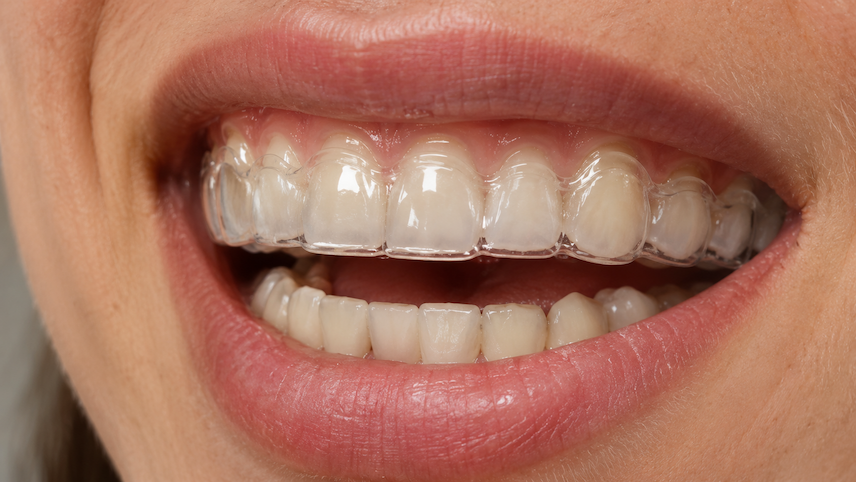
Quick answer: Hard materials generally offer a firmer, more adjustable biting surface, while soft materials offer greater flexibility. However, comfort and durability depend on appliance thickness, fit, design, grinding forces, and individual tolerance. A hard guard can still fracture or become uncomfortable, while a soft guard can provide satisfactory service for some patients.
Comfort Is More Than Softness
A comfortable night guard should stay in place without excessive tightness, allow you to close your mouth without unusual strain, and avoid irritating your gums or cheeks.
A flexible guard may feel pleasant when first inserted but still fit poorly. Conversely, a rigid guard may feel unfamiliar at first while providing stable contact surfaces.
Comfort also depends on whether the appliance covers the correct areas of the teeth, how its edges are finished, and whether its thickness feels manageable during sleep.
Durability Depends on the Person Wearing It
People do not all grind with the same frequency, force, or movement pattern. Some mainly clench, pressing their teeth together without significant movement. Others grind with side-to-side or forward jaw movements.
These differences can affect where an appliance wears. Material failure may include cracks, thinning, holes, permanent indentations, or distortion.
There is no reliable universal replacement schedule based solely on choosing hard or soft plastic. An appliance should be examined when its fit changes, signs of damage appear, or your dentist recommends reassessment.
What About Hybrid or Dual-Laminate Night Guards?
Not every night guard fits neatly into the hard-versus-soft categories. Some dental appliances use more than one material, such as a softer tooth-facing layer combined with a harder outer biting surface.
These are sometimes described as dual-laminate or hybrid guards. Their intended purpose is to combine selected material characteristics, but the exact construction varies between products.
A hybrid guard is not automatically the best compromise. Layer thickness, bonding, fit, available adjustments, and wear resistance all matter. Research has not established that hybrid construction consistently performs better than appropriately selected single-material appliances.
If you are considering a hybrid design, ask your dentist whether it offers a meaningful advantage for your teeth and whether the proposed appliance has any specific maintenance requirements.
How Does a Dentist Decide Which Night Guard Design Is Right?
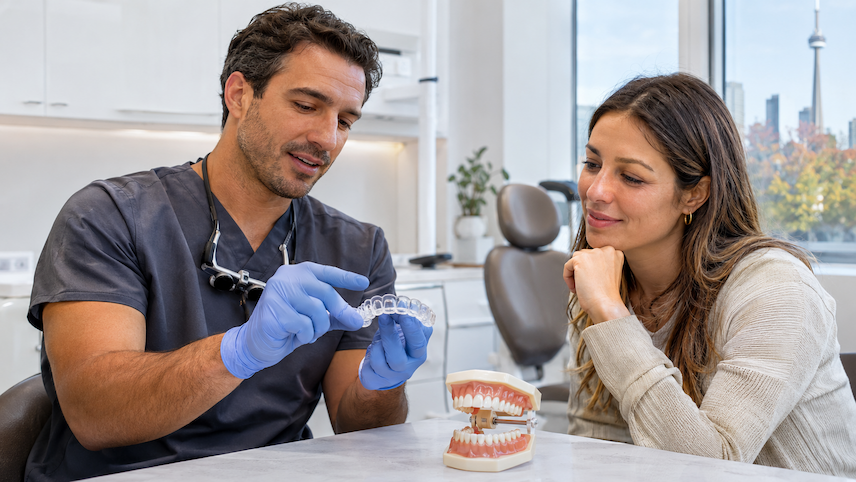
Quick answer: A dentist should select a custom night guard after considering tooth wear, dental restorations, symptoms, the bite, jaw function, and relevant medical history. Material is only one decision. The dentist also determines the appliance’s coverage, thickness, retention, and contact pattern, and whether a night guard is indicated at all.
An assessment may include the following:
- Tooth condition: Checking for wear, fractures, sensitivity, and damage to existing fillings or crowns.
- Bite and restorations: Evaluating how the teeth meet and whether dental work affects appliance fit or design.
- Jaw symptoms: Asking about pain, stiffness, limited opening, or changes in jaw movement.
- Grinding history: Discussing reported nighttime sounds, daytime clenching, and possible contributing factors.
- Sleep and health concerns: Identifying symptoms that may warrant assessment by another healthcare professional.
If a custom appliance is recommended, dental impressions or digital scans may be used to record the tooth shapes. The finished appliance can then be evaluated for retention, comfort, and how the teeth contact it.
Patients should receive instructions appropriate to their particular appliance, including when to wear it, how to clean it, and when to return for review. The precise steps depend on the dentist’s assessment and fabrication method.
At Vancouver Stadium Community Dentist, we offer custom dental night guards in Vancouver. Our dental team can assess your concerns and discuss whether an appliance may be appropriate. Specific material availability and appliance design are determined through professional consultation.
What Should You Ask Before Choosing a Night Guard?
If your dentist recommends a night guard, consider asking:
- Are there signs of tooth wear or damage that affect which material you recommend?
- Would a hard, soft, or hybrid appliance be appropriate for my teeth?
- How will the guard fit around my crowns, fillings, or other dental work?
- What changes in comfort, fit, or bite should prompt a follow-up?
- How should I clean the appliance, and when should its condition be checked?
Can a Night Guard Stop Grinding or Treat Jaw Pain?
Quick answer: A night guard is primarily used to help protect teeth from the effects of grinding or clenching. It does not necessarily stop bruxism, treat its underlying causes, or relieve jaw pain. If you have persistent jaw symptoms, the cause should be assessed rather than assuming a harder or softer appliance will resolve them.
According to the Canadian Dental Association’s guidance on bruxism, grinding and clenching may contribute to tooth damage and jaw-related symptoms. A custom mouthguard may be recommended as part of management.
However, a 2021 systematic review of occlusal splints for bruxism found insufficient evidence to determine whether splints provide greater benefits than no treatment or several alternative approaches for the outcomes studied. A separate 2020 systematic review also found insufficient evidence to establish whether splints reduce tooth wear in patients with bruxism. Night guards are used to provide a physical barrier between the teeth, but this protective purpose should not be confused with proof that they stop grinding, prevent all future damage, or reliably relieve jaw pain.
What If You Have a Temporomandibular Disorder?
Temporomandibular disorders, or TMDs, affect the jaw joints, chewing muscles, or related structures. TMD and bruxism can occur together, but they are not the same condition.
The National Institute of Dental and Craniofacial Research notes that evidence supporting intraoral appliances for TMD-related pain is limited. It advises against using appliances intended to permanently change the bite as routine treatment and recommends stopping an appliance that causes pain.
A different approach or referral may be needed when jaw pain, locking, or restricted movement is the main concern.
Are Hard Night Guards, Retainers, and Sports Mouthguards the Same?
No. These appliances have different purposes, even when some of their materials appear similar.
- Night guard: Intended to help protect teeth from the effects of grinding or clenching, with design selected according to dental needs.
- Orthodontic retainer: Intended to help maintain tooth position after orthodontic treatment. It is not automatically suitable for heavy grinding.
- Sports mouthguard: Designed to reduce dental injury risk during athletic activities. It should not be substituted for a nighttime appliance without professional advice.
- Sleep apnea oral appliance: A separate device that may be prescribed as part of medically coordinated treatment for selected patients with obstructive sleep apnea.
The same distinction applies to a hard night guard retainer, a phrase sometimes used to describe a clear rigid appliance. Its appearance does not tell you whether it was designed for retention, tooth protection, or another purpose.
If you already wear a retainer or use an appliance for sleep-related breathing problems, ask your treating professional before adding or replacing it with a night guard.
For a comparison of professionally fitted and retail appliances, read our article on custom vs over-the-counter night guards.
How Should You Care for a Hard or Soft Night Guard?
Proper care helps keep a dental appliance clean and makes damage easier to identify. Cleaning requirements can vary with the material, so follow the instructions supplied by your dentist or appliance manufacturer.
- Remove the guard carefully rather than twisting or forcing it off the teeth.
- Rinse and clean it using the method recommended for its material.
- Avoid hot water, direct heat, or cleaning products that may deform or damage the appliance.
- Store it in an appropriate clean case, away from pets and excessive heat.
- Inspect it regularly for cracks, rough edges, thinning, or changes in shape.
- Bring it to dental appointments when asked so its condition and fit can be reviewed.
Do not assume that toothpaste, disinfectants, denture-cleaning tablets, or hot-water soaking are suitable for every material. Some cleaning methods can scratch, discolour, weaken, or distort certain appliances.
Never attempt to correct an uneven bite by cutting or grinding the appliance yourself. Changes to its contact surfaces can alter how it functions.
When Should You Ask a Dentist About Your Night Guard?
Quick answer: Ask a dentist for an assessment if you notice new or worsening tooth wear, chipped teeth, recurring sensitivity, jaw discomfort, or problems with an existing night guard. Stop wearing an appliance that causes pain, unwanted tooth pressure, or a persistent bite change. The dentist can check whether the guard needs adjustment, replacement, or a different treatment approach.
Symptoms such as morning headaches or jaw soreness do not prove that you have sleep bruxism. They can have other causes and may require a broader assessment.
Arrange prompt dental care if you have a painful cracked tooth, a newly damaged restoration, or worsening dental pain. If a jaw suddenly locks or you cannot open or close your mouth normally, seek timely professional assessment.
Also mention significant snoring, witnessed pauses in breathing, or excessive daytime sleepiness to an appropriate healthcare professional. A conventional grinding guard is not a substitute for evaluation or treatment of obstructive sleep apnea.
If you are unsure whether you grind your teeth during sleep, a dental examination can help identify signs of tooth wear and assess possible contributing factors. Morning jaw soreness or headaches alone cannot confirm sleep bruxism.
Choosing Your Next Step
The best night guard is not necessarily the hardest, softest, or most expensive. It is an appliance selected for your dental condition, designed appropriately, and reviewed if problems develop.
If you are comparing materials or concerned about nighttime grinding, contact Vancouver Stadium Community Dentist to request a dental assessment at our downtown Vancouver clinic near Stadium–Chinatown.
This article is for general educational purposes and does not replace an individual dental examination, diagnosis, or treatment recommendation.