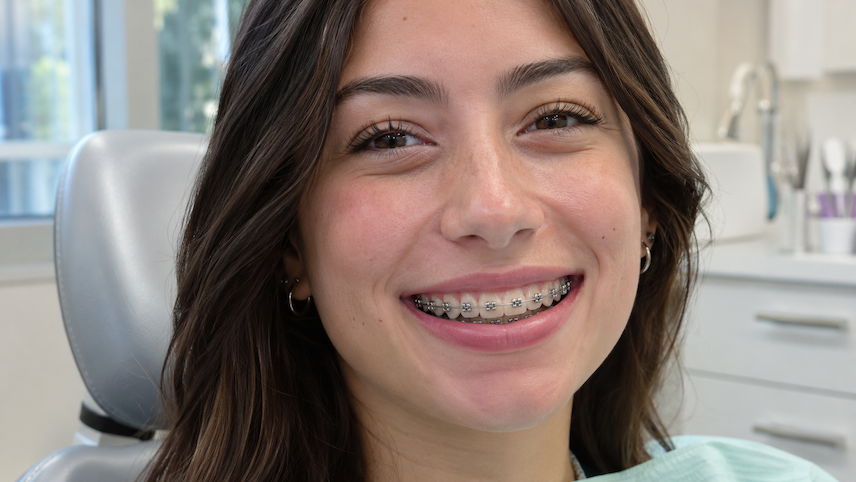
Good oral hygiene with braces means keeping your teeth, gums, brackets and wires clean throughout orthodontic treatment. Fixed braces create additional spaces where food and dental plaque can collect, so brushing alone may not reach every surface.
The good news is that caring for your teeth with braces does not need to be complicated. With suitable cleaning tools, a consistent routine and regular dental care, you can help reduce the risk of cavities, gum inflammation and permanent white marks on your teeth.
How Do You Clean Around Brackets and Wires Without Damaging Them?
Quick answer: To clean around fixed braces safely, use a soft-bristled toothbrush and fluoride toothpaste, brushing gently above and below each bracket. Clean beneath orthodontic wires with an appropriately sized interdental brush and use floss with a threader or another suitable interdental tool. Avoid forceful scrubbing, pulling on wires or pushing cleaning devices into tight spaces.
Orthodontic brackets are attached to individual teeth and connected by an archwire. These components create small spaces that an ordinary brushing motion can miss. Cleaning involves reaching the exposed tooth surfaces around the appliance while protecting the brackets and wire.
The American Association of Orthodontists’ oral hygiene guidance recommends brushing regularly, flossing at least once a day and using an interdental brush to reach areas around fixed appliances. Your orthodontist may recommend additional techniques or tools based on the design of your braces and your individual oral health needs.
Step-by-Step Oral Hygiene Routine for Fixed Braces
A reliable routine combines daily fluoride brushing, cleaning between teeth and additional attention to areas surrounding your braces. The following sequence is designed for conventional fixed braces, although your orthodontic team may modify it for your treatment.
Step 1: Rinse Away Loose Food Particles
After eating, rinse your mouth with plain water to help dislodge food trapped around the brackets and wires. This is especially useful when brushing immediately is impractical, such as during school, work or travel.
Check the spaces around your back teeth and under the archwire, where pieces of food can remain caught. A mirror can help you locate visible debris.
Rinsing is a useful first step, but it cannot remove the sticky bacterial film that adheres to tooth surfaces. That requires mechanical cleaning with a toothbrush and appropriate interdental tools.
Step 2: Brush Around Every Bracket and Along the Gumline
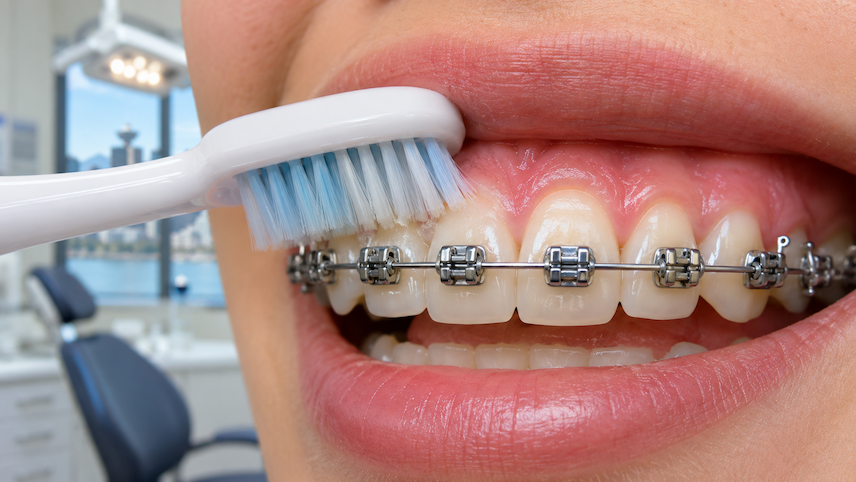
Use a soft-bristled manual toothbrush or a suitable electric toothbrush with fluoride toothpaste. Aim to brush for at least two minutes, twice daily, and after meals when practical, following your orthodontist’s instructions.
- Start at the gumline: Angle the bristles gently toward the area where your teeth meet the gums. Use small, controlled movements without pressing hard.
- Clean above the brackets: Position the toothbrush so the bristles reach the exposed enamel between the gumline and each bracket.
- Clean below the brackets: Change the angle to reach tooth surfaces between the brackets and biting edges.
- Brush the remaining surfaces: Clean the inner surfaces, chewing surfaces and back molars, including areas without attached brackets.
- Check your results: Look for remaining food or visible buildup, particularly beside brackets and near the gums.
Divide your mouth into smaller sections if that helps you clean systematically. An electric toothbrush may be convenient, but it is not necessary for everyone. Follow its manufacturer’s instructions and avoid applying excessive pressure against orthodontic hardware.
If a bracket feels loose while brushing, stop manipulating it and contact your orthodontic provider. Do not attempt to press it back into place with your toothbrush.
Step 3: Clean Between Your Teeth and Beneath the Wire
Traditional floss can be difficult to use with fixed braces because the archwire blocks direct access between teeth. A floss threader or orthodontic flosser can help guide floss beneath the wire.
With a floss threader, carefully pass the floss under the archwire without pulling against it. Guide the floss gently between neighbouring teeth, curve it against the side of one tooth and move it up and down. Repeat against the adjacent tooth before withdrawing it carefully.
Avoid snapping floss against the gums or dragging it forcefully against the brackets. If a tool catches repeatedly, ask your dental hygienist or orthodontist to demonstrate a safer technique.
Clean between teeth at least once daily. The evening is often a convenient time because you can work carefully without rushing between meals.
Step 4: Use an Interdental Brush for Hard-to-Reach Areas
An interdental brush is a small brush designed to clean spaces that are difficult for a conventional toothbrush to reach. Certain designs are particularly useful around orthodontic appliances.
Guide the brush gently beneath the archwire and around bracket edges where there is enough room. Use light movements to remove trapped debris and plaque. The brush should fit comfortably without bending the wire or forcing its way through a tight gap.
Different brush sizes are available. A larger brush is not necessarily more effective, and forcing a brush into an unsuitable space can irritate gums or damage an appliance.
Ask your dental professional to recommend an appropriate size and demonstrate where it should be used. Interdental brushes around brackets do not automatically replace cleaning the contact surfaces between adjacent teeth.
Step 5: Finish Your Evening Routine With Fluoride Protection
Fluoride toothpaste helps strengthen enamel and supports remineralization, the process by which minerals are replaced in early areas of enamel damage.
After your final brushing, spit out excess toothpaste rather than immediately rinsing thoroughly with water. This allows fluoride to remain in contact with your teeth longer.
Some patients with braces may benefit from an additional fluoride mouthrinse. However, the appropriate product, concentration and timing depend on age, cavity risk and professional advice. If recommended, a rinse used at another time of day may be preferable to using it immediately after brushing.
Do not begin using prescription-strength fluoride products or medicated rinses without appropriate professional guidance.
Which Interdental Tools Work Best Around Braces?
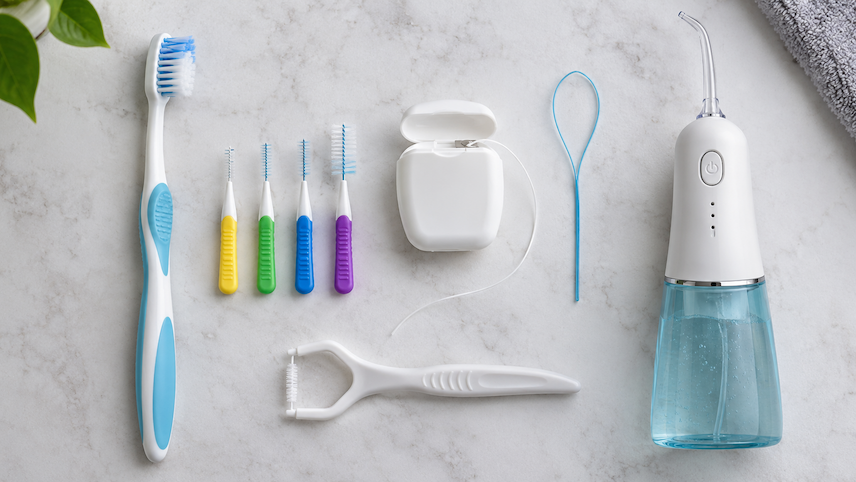
Quick answer: Floss threaders and orthodontic flossers help clean between teeth beneath fixed wires, while appropriately sized interdental brushes reach around brackets and accessible gaps. Water flossers can help some people remove debris and improve cleaning access, but may not replace all mechanical interdental cleaning. The best combination depends on tooth spacing, appliance design and your ability to use each tool safely.
| Cleaning tool | Best use with braces | Important limitation |
|---|---|---|
| Soft manual toothbrush | Cleaning enamel, gumlines and areas surrounding brackets | May miss spaces beneath wires and between teeth |
| Electric toothbrush | Routine brushing with controlled movements | Requires proper technique and gentle pressure |
| Floss with threader | Cleaning between teeth beneath the archwire | May require extra time and practice |
| Orthodontic flosser | Accessing certain spaces around fixed appliances | Must be compatible with the appliance and available clearance |
| Interdental brush | Cleaning accessible gaps and around bracket edges | Incorrect sizing or force may injure gums or catch on hardware |
| Water flosser | Flushing debris from hard-to-reach areas as an additional cleaning aid | May not adequately clean every tooth contact on its own |
There is no requirement to buy every product in this table. A simple combination that you can use thoroughly and consistently is more useful than a complicated routine that becomes difficult to maintain.
If you have very tight contacts, crowded teeth, sensitive gums or a complex orthodontic appliance, ask your dental professional to help select the tools most appropriate for you.
Why Does Plaque Accumulate More Easily Around Braces?
Quick answer: Brackets, wires and other fixed orthodontic components create additional surfaces where food particles and dental plaque can collect. They also make some tooth surfaces harder to reach with a standard toothbrush. If plaque remains around brackets or near the gums, it can increase the risk of tooth decay, enamel demineralization and plaque-related gum inflammation.
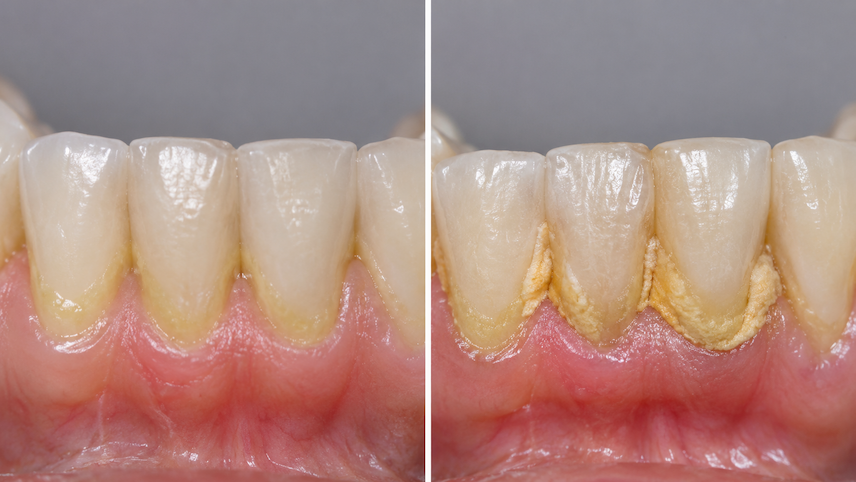
Dental plaque is a bacterial biofilm that develops naturally on teeth. Bacteria within plaque can use sugars from foods and drinks to produce acids. Repeated acid exposure can cause minerals to leave tooth enamel, a process known as demineralization.
Around braces, early mineral loss may appear as chalky white patches. These are sometimes called white spot lesions. They may become more noticeable after the brackets are removed, although not every white mark represents the same condition.
Poor oral hygiene with braces may also contribute to red, swollen or bleeding gums. These symptoms can be associated with plaque-related gingivitis, but their presence does not establish a diagnosis. An examination is needed to identify the cause and assess whether further treatment is required.
If plaque is not removed, some of it can mineralize into tartar, also known as dental calculus. Tartar cannot be reliably removed with ordinary brushing or flossing. Our guide to the difference between plaque and tartar explains why professional removal may be needed.
What Should You Avoid When Cleaning Teeth With Braces?
Cleaning thoroughly does not mean brushing harder or using aggressive methods to reach difficult spaces. The following habits can damage your gums, enamel or orthodontic appliances.
- Do not use sharp objects: Avoid toothpicks with sharp points, metal dental picks or improvised household tools to remove material around brackets or beneath the gums.
- Do not scrub forcefully: Hard brushing can irritate gum tissue and may contribute to tooth wear. Gentle, accurate cleaning is preferable.
- Do not force interdental brushes: Use a suitable size and avoid bending wires or pushing against brackets.
- Do not scrape away tartar: Hardened deposits require professional assessment and removal using appropriate instruments.
- Do not rely on mouthwash alone: A mouthrinse cannot replace mechanical plaque removal, even if your mouth feels fresh afterward.
- Avoid abrasive or acidic DIY remedies: Lemon juice, vinegar and abrasive homemade whitening mixtures are not safe solutions for deposits or white marks around braces.
Be cautious about online demonstrations that involve repositioning orthodontic wires or modifying braces at home. Cleaning your appliance and repairing your appliance are different tasks. Loose or broken components should be assessed by your orthodontic provider.
How Can Food and Daily Habits Affect Oral Hygiene With Braces?
What you eat and drink can influence both plaque accumulation and the risk of damaging orthodontic hardware.
Sticky foods may cling to brackets and wires, making cleaning more difficult. Hard foods can dislodge brackets or bend wires, depending on how they are eaten. Follow the dietary instructions provided by your orthodontist, including any restrictions specific to your appliance.
Frequent sugary drinks and snacks also increase the number of times your teeth are exposed to acids produced by plaque bacteria. This matters particularly when cleaning around the brackets is already challenging.
Practical adjustments include:
- Choose plain water as your main everyday drink.
- Limit frequent sipping of sugary beverages between meals.
- Cut firm foods into manageable pieces when your orthodontist recommends doing so.
- Keep a travel toothbrush and suitable interdental cleaner available for meals away from home.
- Use water to rinse after eating when immediate brushing is not possible.
If you consume acidic foods or drinks, avoid immediately scrubbing your teeth afterward. Acid exposure can temporarily soften the enamel surface. Rinsing with water and allowing time before brushing is a more cautious approach.
These changes are intended to support a manageable routine, not to create unnecessary food restrictions. Your orthodontic team can explain which foods pose a mechanical risk for your particular braces.
How Can Parents Help Teenagers Maintain Good Oral Hygiene With Braces?
Teenagers may find braces cleaning frustrating because it takes longer than brushing without an appliance. A predictable routine and appropriate tools can make daily care easier.
Parents can help by making sure their teenager has a soft toothbrush, fluoride toothpaste, an appropriate interdental cleaner and enough time for thorough evening brushing.
A quick visual check may reveal obvious food trapped around brackets, but clean-looking teeth do not guarantee that plaque has been removed from every surface. Dental professionals can assess areas that are difficult to see at home.
For teenagers who regularly forget to clean after meals, a small orthodontic care kit in a school bag can make the routine more practical. Parents can also encourage questions during appointments rather than assuming the teenager already understands each cleaning technique.
Children and adolescents may need different fluoride guidance according to age and cavity risk. Follow the advice of their dental professional, particularly when considering additional fluoride rinses.
When Should a Dentist or Orthodontist Check Irritated Gums?
Quick answer: Contact your dentist if gums around braces bleed repeatedly, remain swollen or become increasingly painful. These symptoms need assessment rather than self-diagnosis. Seek urgent dental care for significant swelling, especially with fever. Difficulty breathing or swallowing, severe spreading swelling, or uncontrolled heavy bleeding requires emergency medical care. In British Columbia, call 911 for a medical emergency.
Mild tenderness after an orthodontic adjustment may occur, but discomfort caused by tooth movement is different from persistent gum inflammation or a damaged appliance.
The following guide can help you decide what to do next.
| What you notice | Recommended next step |
|---|---|
| Occasional minor bleeding while cleaning | Review your technique and arrange professional advice if it continues or recurs |
| Persistent red, swollen or tender gums | Book a dental assessment rather than relying on stronger brushing |
| New chalky white areas around brackets | Ask your dentist or orthodontist to assess possible enamel changes |
| A loose bracket or protruding wire | Contact your orthodontic provider for appliance-specific instructions |
| Increasing tooth pain or suspected decay | Arrange timely dental evaluation |
| Facial swelling with fever, difficulty swallowing or breathing | Seek urgent medical care; breathing difficulty is an emergency |
Bleeding gums should not be treated by abandoning interdental cleaning altogether. However, persistent bleeding should not simply be dismissed as a normal consequence of braces.
If symptoms do not improve, a dental professional can assess whether inflammation, plaque deposits, appliance irritation, tooth decay or another issue is contributing.
Do You Still Need Professional Dental Cleanings While Wearing Braces?
Quick answer: Yes. People with fixed braces should continue routine dental examinations and professional cleanings according to their individual oral health needs. Orthodontic appointments focus on tooth movement and appliance management, while general dental visits assess concerns such as tooth decay, gum health and deposits that home care cannot remove.
The appropriate cleaning schedule is not identical for everyone. Your dentist or dental hygienist may consider your plaque levels, gum condition, history of cavities and ability to clean around the appliance before recommending an interval.
Professional appointments can also identify areas that you routinely miss while brushing and help determine whether additional cleaning tools or preventive measures would be useful.
At Vancouver Stadium Community Dentist, we provide dental hygiene and professional cleaning services in Downtown Vancouver. Our dental team can assess your oral health and discuss an appropriate preventive care routine while you undergo orthodontic treatment elsewhere.
For additional everyday care advice beyond braces, see our guide on improving your daily oral hygiene routine.
Maintain Healthy Teeth and Gums Throughout Orthodontic Treatment
Keeping your mouth healthy during orthodontic treatment involves both consistent home care and professional monitoring. If you are finding it difficult to clean around braces, or have concerns about your gums or enamel, an individualized dental assessment can help identify the next step.
Contact Vancouver Stadium Community Dentist to request a dental appointment at our Downtown Vancouver clinic.
This article is intended for general education and does not replace an individual dental examination, diagnosis or instructions from your treating orthodontist.