
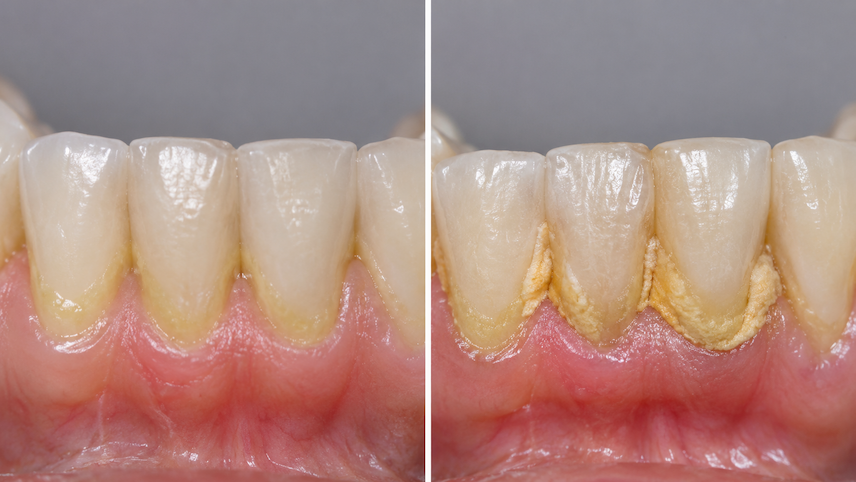
Why Can Brushing Remove Plaque but Not Tartar?
Quick answer: Plaque is a soft bacterial film that can be disrupted and removed with effective brushing and cleaning between teeth. Tartar develops when minerals harden plaque into deposits that adhere firmly to tooth surfaces. Once tartar forms, ordinary brushing and flossing cannot reliably remove it. Professional dental instruments are needed for safe, effective removal.
Think of brushing and flossing as daily maintenance. They remove plaque before it has the opportunity to harden. Professional cleaning addresses deposits that remain attached despite regular home care.
The American Dental Association’s clinical overview of periodontitis describes how professional treatment and ongoing plaque control work together in managing periodontal disease.
Plaque vs Tartar: How Do They Compare?
Although plaque and tartar are related, they differ in texture, appearance, removal and potential effects on your oral health.
| Feature | Dental Plaque | Tartar (Calculus) |
|---|---|---|
| What it is | A soft bacterial biofilm | Mineralized, hardened plaque |
| Texture | Soft and sticky | Hard and firmly attached |
| Appearance | Often colourless or pale | May appear white, yellow, brown or stained |
| Common locations | Tooth surfaces, between teeth and near gums | Often near the gumline, behind lower front teeth and around upper back teeth |
| Home removal | Effective brushing and interdental cleaning | Cannot reliably be removed with home hygiene tools |
| Professional care | Cleaning and personalized hygiene advice | Professional scaling, with further treatment when indicated |
The practical difference is what you can safely do about each deposit. Plaque control is an everyday responsibility, while existing tartar requires professional attention. Neither appearance nor texture alone is enough to diagnose gum disease.
How Does Plaque Become Tartar?
Quick answer: Plaque forms when bacteria attach to tooth surfaces and develop a sticky biofilm. If plaque remains, minerals from saliva and oral fluids can gradually accumulate within it, creating hardened tartar. The process varies by person and location, so there is no single reliable timetable for when plaque becomes calculus.
Your mouth naturally contains bacteria. These microorganisms collect on teeth and produce a protective matrix that helps them adhere to surfaces. This structured community is called a biofilm.
When you consume foods and drinks containing fermentable carbohydrates, including sugars, certain plaque bacteria produce acids. Repeated acid exposure can contribute to tooth enamel losing minerals, increasing the risk of cavities.
Mineralization is a different process. Salivary minerals, particularly calcium and phosphate, can become incorporated into plaque and transform it into a harder deposit.
Several factors can influence where and how readily tartar develops:
- Saliva composition: Mineral concentrations and saliva flow differ between individuals.
- Plaque removal: Buildup is more likely to persist where brushing or flossing is ineffective.
- Tooth position: Crowded or difficult-to-access surfaces can be harder to clean thoroughly.
- Dental appliances and restorations: Certain contours and hard-to-reach areas may make plaque control more challenging.
- Individual oral conditions: Dry mouth, gum changes and other factors can affect the oral environment and daily hygiene needs.
Some people accumulate noticeable tartar more readily than others. This does not automatically mean their dental hygiene is poor. The important question is whether remaining plaque and hardened deposits are being managed effectively.
Where Does Tartar Commonly Accumulate?
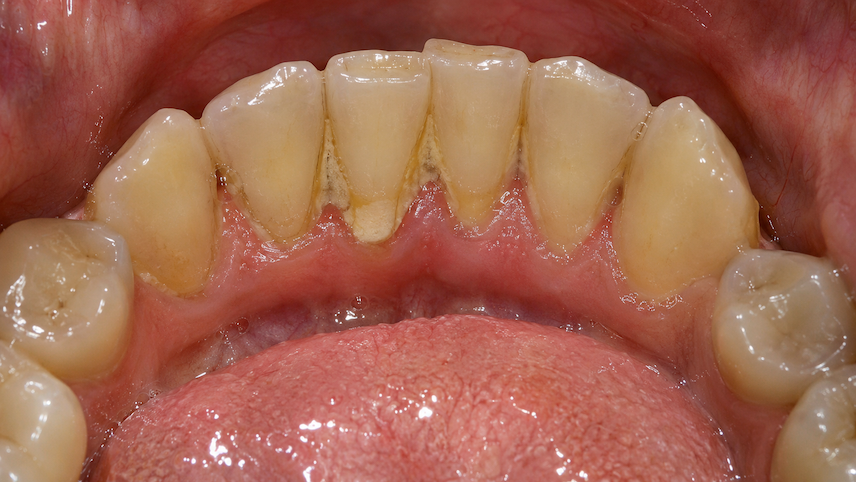
Quick answer: Tartar often develops behind the lower front teeth and on the cheek-facing surfaces of upper back teeth, where nearby salivary glands contribute minerals. It can also form along the gumline, between teeth and beneath the gums. Deposits below the gumline generally cannot be identified reliably by looking in a mirror.
Behind the Lower Front Teeth
Plaque behind your lower front teeth can harden into tartar, particularly along the tongue-facing surfaces of the lower incisors. These are the small teeth at the front of your mouth.
Saliva enters the mouth through ducts beneath the tongue, close to these teeth. Mineral deposits can therefore develop in an area that many people overlook during brushing.
Try paying attention to the inner surfaces of your lower front teeth rather than brushing only the surfaces visible when you smile. A persistent rough or raised area may warrant examination, but it is not necessarily tartar.
Upper Back Teeth and the Gumline
Salivary ducts also open near the upper molars. As a result, tartar may accumulate on their outer surfaces, particularly when plaque is not consistently removed.
The gumline is another important area because plaque can collect where teeth and gum tissue meet. Depending on the condition of the gums, deposits may extend beneath the visible margin.
A dental professional can assess surfaces you cannot easily see, including areas around existing fillings, crowns and other dental work.
How Can You Tell Whether You Have Plaque or Tartar?
You may notice differences in how deposits look and feel, but a visual check at home is not a reliable way to confirm their identity.
Fresh plaque is often difficult to see. It may make teeth feel slightly fuzzy, particularly after a period without brushing. Disclosing tablets designed for dental plaque can temporarily colour some areas of biofilm, helping show where cleaning has been missed. Follow the product instructions and ask your dental professional whether they are suitable for you.
Tartar may feel like a firm, uneven deposit that remains after brushing. Its colour varies, and staining from coffee, tea, tobacco or other substances can make deposits more noticeable.
However, several conditions can produce a similar appearance, including surface staining, exposed root surfaces, tooth-coloured restorations and changes in enamel texture.
Do not assume that a dark spot is tartar or that a smooth-looking tooth is free of plaque. A dental examination can help distinguish these findings.
Can Plaque and Tartar Cause Cavities or Gum Disease?
Quick answer: Dental plaque can contribute to cavities when bacteria produce acids that damage enamel. Plaque accumulating near the gums can also trigger inflammation. Tartar makes surfaces harder to clean and can retain additional plaque, contributing to ongoing irritation. However, visible buildup alone does not establish whether someone has gingivitis, periodontitis or tooth decay.
Plaque and Tooth Decay
Dental decay develops through repeated interactions among oral bacteria, dietary carbohydrates, tooth surfaces and time. Acid exposure can gradually weaken enamel. Saliva and fluoride support remineralization, but repeated mineral loss may eventually produce a cavity.
This is why reducing frequent sugary snacks and drinks matters alongside brushing. Cleaning your teeth removes biofilm, while dietary choices can reduce the frequency of acid attacks.
Health Canada’s fluoride guidance explains how fluoride supports enamel strength and helps prevent tooth decay.
Gingivitis and Periodontitis
Gingivitis is inflammation of the gums that commonly develops in response to accumulated dental plaque. Signs may include redness, swelling and bleeding during brushing or flossing.
Plaque-induced gingivitis can often resolve with improved plaque control and appropriate professional care. Periodontitis is different. It involves inflammation and damage affecting the tissues and bone supporting the teeth. Lost supporting tissue does not necessarily return simply because the gums stop bleeding.
The American Dental Association’s clinical overview of periodontitis describes how professional treatment and ongoing plaque control work together in managing periodontal disease.
Importantly, periodontitis may develop with limited discomfort. The absence of pain or obvious bleeding is not proof that supporting tissues are healthy.
How to Remove Plaque Safely at Home
The goal of home care is to disrupt plaque regularly without damaging your teeth, gums or dental restorations. You do not need aggressive pressure or specialized scraping tools to accomplish this.
The Public Health Agency of Canada recommends brushing for approximately two minutes at least twice daily and flossing every day as part of adult oral care.
Step 1: Brush Thoroughly Twice a Day
Use a soft-bristled toothbrush and fluoride toothpaste. Position the bristles toward the area where the teeth meet the gums, using gentle, controlled movements.
Clean the outer, inner and chewing surfaces of each tooth. When brushing the backs of the front teeth, it may help to turn the toothbrush vertically to reach those narrow surfaces.
A powered toothbrush can be a useful alternative to a manual brush, especially if you find it difficult to maintain consistent technique. Whichever type you choose, adequate coverage and gentle pressure are important.
Step 2: Clean Between Your Teeth Daily
Toothbrush bristles do not effectively reach every space between neighbouring teeth.
Dental floss is useful for tight contacts. Guide it gently between the teeth, curve it around the side of each tooth and move it carefully beneath the gum margin without snapping it into the tissue.
Interdental brushes may be helpful for larger spaces, but the brush must fit without force. Water flossers are another option for selected patients, although they may not replace every aspect of mechanical cleaning for everyone.
If you have bridges, implants, braces or gum recession, ask your dental professional which cleaning tools and techniques are appropriate for those areas.
Step 3: Make Fluoride and Food Choices Part of Your Routine
Fluoride toothpaste helps protect tooth enamel against decay. For most adults, spitting out excess toothpaste rather than immediately rinsing vigorously with water can help retain fluoride on the teeth.
Frequent sugary drinks and snacks provide repeated opportunities for plaque bacteria to produce acid. Drinking water and reducing the frequency of sugar exposure can support your overall oral health.
For young children, toothpaste quantity and brushing supervision should be age-appropriate. Parents should follow guidance from their child’s dental professional rather than simply applying adult routines.
Step 4: Check Areas You Regularly Miss
Take a few moments to consider your brushing pattern. Are you reaching behind the lower front teeth? Are the back molars receiving the same attention as the front teeth? Are you consistently cleaning around the gumline?
Making small improvements to your technique can be more useful than brushing harder or adding multiple products without a clear purpose.
What Should You Avoid When Trying to Remove Tartar?
If you notice hardened material on a tooth, resist the temptation to scrape it away yourself.
- Do not use metal dental picks or household tools to chip tartar off your teeth. They can injure gum tissue, scratch surfaces or damage restorations.
- Do not use sharp objects to clean beneath the gumline. Deposits in these areas require professional assessment and appropriate instruments.
- Avoid acidic DIY treatments involving lemon juice or vinegar. Acid exposure can damage tooth enamel.
- Avoid abrasive scrubbing with baking soda mixtures, charcoal powders or other homemade products intended to grind away hard deposits.
- Do not rely on mouthwash to dissolve tartar. Mouthrinses may have specific roles in oral care, but they do not substitute for scaling.
Toothpastes marketed for tartar control may help limit new calculus accumulation in some circumstances, depending on their ingredients. They should not be interpreted as products capable of reliably removing established tartar.
If a deposit persists after normal brushing, leave it alone and arrange a professional assessment rather than increasing pressure.
How Do Professional Dental Cleanings Remove Tartar?
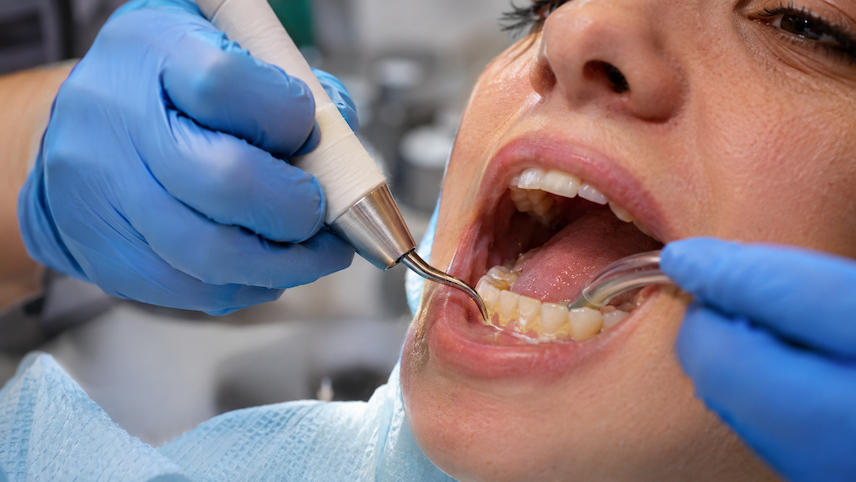
Professional tartar removal involves instruments designed to remove hardened deposits from tooth surfaces. The procedure is commonly called scaling.
Depending on the patient’s needs, dental professionals may use hand instruments, powered ultrasonic scalers or a combination of methods.
Ultrasonic scalers use rapidly vibrating tips and water to assist with removing deposits. Hand instruments allow controlled cleaning of selected surfaces, including areas requiring particular attention.
The appropriate approach depends on the amount and location of buildup, gum condition, medical history and other clinical findings.
Routine Scaling vs Deep Cleaning
Not every patient with tartar needs periodontal treatment.
A routine professional cleaning generally addresses plaque and calculus buildup as part of preventive dental care. Additional periodontal assessment is appropriate when there are findings suggesting disease affecting the supporting structures of the teeth.
If periodontitis is diagnosed, treatment may involve scaling and root planing, a procedure that cleans affected root surfaces beneath the gums. Additional care and maintenance depend on the severity of disease and individual risk factors.
At Vancouver Stadium Community Dentist, our dental hygiene and cleaning services in Vancouver include professional plaque and tartar removal, oral health evaluation and guidance for daily care.
How Can Professional Cleaning and Home Care Work Together?
Quick answer: Daily brushing and interdental cleaning control new plaque formation, while professional dental visits allow hardened deposits to be removed and gum health to be assessed. Professional cleaning does not replace consistent home care, and excellent brushing cannot remove all established tartar. The recommended visit frequency depends on your oral health findings and individual risk.
During a dental appointment, the clinician may examine the gums, look for bleeding or inflammation and measure the spaces between the gums and teeth when appropriate. These findings help determine whether routine preventive care is sufficient or additional periodontal evaluation is required.
Some people benefit from more frequent maintenance because of their periodontal history, difficulty cleaning certain areas or other clinical factors. Others may have different recall needs.
Rather than assuming everyone needs the same six-month schedule, discuss an appropriate interval based on your assessment. If you have concerns beyond visible buildup, a dental checkup can help clarify whether further investigation or treatment is needed.
When Should You See a Dentist About Plaque or Tartar?
You do not need to wait for tooth pain before seeking dental advice. Some oral health problems have few noticeable symptoms in their earlier stages.
The following guide can help you decide what to do next without trying to diagnose yourself.
| What You Notice | Suggested Next Step |
|---|---|
| A hard deposit that remains after brushing | Arrange a routine dental assessment and cleaning as appropriate. |
| Bleeding gums that persist or recur | Book a dental examination to investigate possible inflammation and other causes. |
| Persistent bad breath or an unpleasant taste | Seek an assessment, especially if symptoms continue despite daily hygiene. |
| Receding gums or a tooth that feels loose | Arrange a prompt dental evaluation rather than waiting for a routine appointment. |
| Severe dental pain, significant swelling or pus | Seek urgent dental assessment. |
| Facial swelling with difficulty breathing or swallowing | Seek immediate emergency medical care. |
Bleeding gums can have several possible explanations. Plaque-related inflammation is common, but brushing trauma, certain medical conditions and medications may also be relevant.
A dental professional can assess symptoms in context rather than assuming every case of bleeding or discolouration is caused by tartar.
Can Tartar Come Back After a Dental Cleaning?
Quick answer: Yes. Removing tartar does not stop new dental plaque from forming. Plaque continuously develops on tooth surfaces, and deposits that remain can mineralize again. Consistent home hygiene helps limit new accumulation, but the rate varies between individuals. Follow-up appointments should be based on your personal dental and gum health needs.
You may notice that certain areas collect deposits more readily, particularly behind your lower front teeth. Mentioning these patterns during your appointment can help your dental professional identify areas where a change in technique or cleaning tool may be useful.
Keeping Your Teeth and Gums Healthy in Downtown Vancouver
Understanding the difference between plaque and tartar helps you choose the right response. Focus on gentle, consistent plaque removal at home, and seek professional care for deposits that have hardened or symptoms that concern you.
At Vancouver Stadium Community Dentist, we welcome patients looking for preventive dental care near Stadium–Chinatown. If you have noticed tartar buildup or want guidance on your cleaning routine, contact our downtown Vancouver dental team to arrange an appointment.
This article is for general educational purposes and does not replace an individualized dental examination, diagnosis or treatment plan.