Can Hardened Tartar Be Removed at Home?
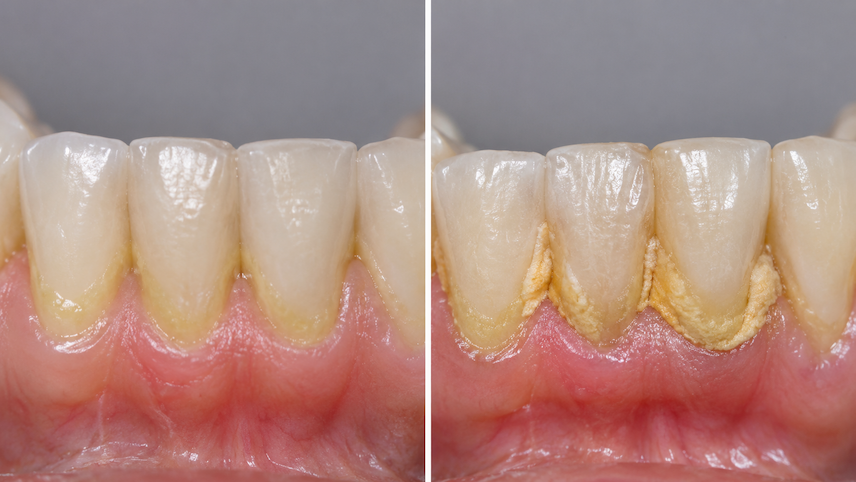
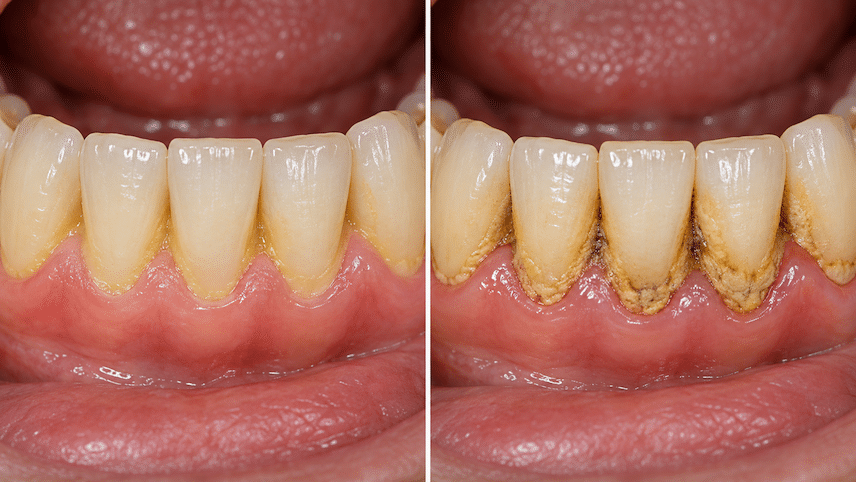
Quick answer: No. Hardened tartar, also called dental calculus, cannot be reliably removed with a toothbrush, floss, or home remedies. A dentist or dental hygienist must remove it using appropriate professional instruments. Daily brushing and interdental cleaning help remove soft plaque before it hardens, but attempting to scrape tartar yourself can injure your gums or teeth.
Tartar can accumulate along the gumline, between teeth, and sometimes beneath the gums. When deposits form in areas you cannot easily see or reach, professional assessment becomes particularly important.
What Is the Difference Between Plaque and Tartar?
Plaque is a bacterial biofilm, meaning a community of microorganisms living within a sticky layer on the tooth surface. It develops naturally, even when you regularly brush your teeth. When plaque is left undisturbed, minerals in saliva can cause it to harden into tartar.
The important distinction is not simply how buildup looks, but whether ordinary home cleaning can remove it.
| Feature | Dental Plaque | Tartar (Calculus) |
|---|---|---|
| Texture | Soft, sticky bacterial film | Hard, mineralized deposit |
| Appearance | Often colourless or pale | May appear yellow, brown, or darker |
| Where it forms | On tooth surfaces and around the gumline | Above or below the gumline |
| Home removal | Usually removable with effective brushing and interdental cleaning | Requires professional instruments |
| Main concern | Contributes to tooth decay and gum inflammation | Creates a rough surface that can retain additional plaque |
You cannot always identify deposits accurately by colour or texture alone. A dark area might be staining, tartar, tooth decay, or another dental concern. If a deposit remains despite careful cleaning, avoid scraping it and ask a dental professional to examine it.
How to Remove Plaque From Teeth: A Safe Daily Routine
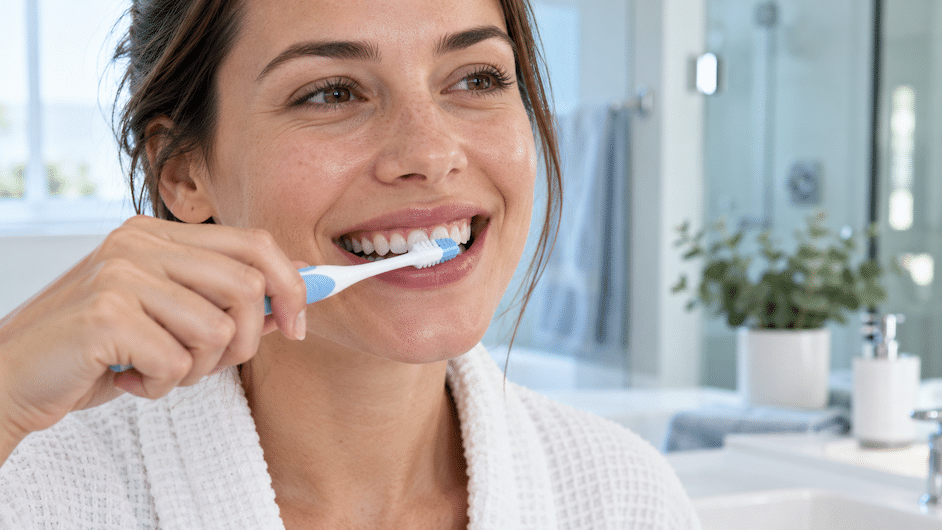
Quick answer: Brush your teeth twice daily for approximately two minutes with fluoride toothpaste and a soft-bristled toothbrush. Clean between your teeth once a day using floss or an appropriately sized interdental cleaner. Gentle, consistent cleaning is more useful than aggressive scrubbing. A dentist or dental hygienist can help adapt the routine to your mouth.
The following steps reflect oral-health recommendations from the Public Health Agency of Canada and the American Dental Association.
Step 1: Choose a Soft-Bristled Toothbrush
A soft-bristled brush is suitable for most people because it can clean effectively without the excessive force associated with harder bristles. Choose a brush head that comfortably reaches your back teeth.
You can use either a manual or an electric toothbrush. The best choice is one that you can control comfortably and use consistently. An electric toothbrush may be particularly convenient if you have difficulty maintaining a thorough brushing technique.
Replace your brush or electric toothbrush head approximately every three to four months, or sooner if its bristles become frayed.
Step 2: Brush Gently Along the Gumline
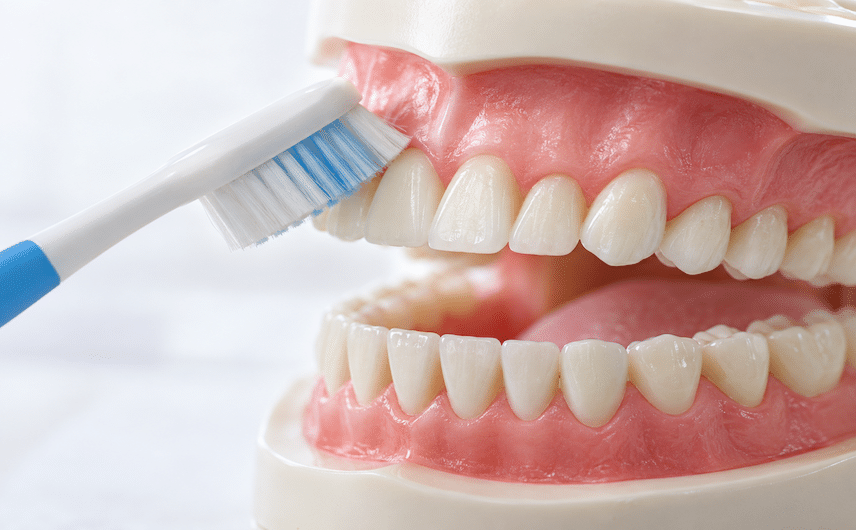
Position the brush at approximately a 45-degree angle toward the gumline. Using light pressure and short movements, clean the outer, inner, and chewing surfaces of your teeth.
- Start on one side of your mouth and work systematically toward the other.
- Spend time where your teeth meet your gums, an area where plaque commonly accumulates.
- Brush the inside surfaces, including behind your lower front teeth.
- Clean the chewing surfaces of your molars, paying attention to their grooves.
- Use gentle vertical strokes to reach the inner surfaces of your front teeth.
Apply only enough pressure to keep the bristles in contact with the tooth surfaces. If your toothbrush bristles spread outward while brushing, you may be pressing too hard.
Step 3: Use Fluoride Toothpaste
Fluoride toothpaste plays an important role in protecting teeth against cavities. While brushing physically disrupts plaque, fluoride helps strengthen enamel and supports remineralization, the process by which minerals are restored to weakened tooth surfaces.
After brushing, spit out the excess toothpaste. Avoid immediately rinsing thoroughly with water, as doing so reduces the fluoride remaining on your teeth.
Adults can generally use regular fluoride toothpaste. For children aged 3 to 6, Health Canada recommends a small, pea-sized amount of fluoride toothpaste with adult assistance. For children under 3, a dental professional should assess cavity risk and advise whether to use a rice-grain-sized amount of fluoride toothpaste. Supervise brushing to limit swallowing.
Step 4: Clean Between Your Teeth Once a Day
A toothbrush cannot reliably clean every surface where neighbouring teeth touch. Floss, interdental brushes, or other suitable cleaning devices help reach these areas.
For traditional dental floss:
- Guide the floss gently between two teeth without snapping it against the gums.
- Curve the floss into a C-shape around the side of one tooth.
- Move it carefully up and down against the tooth surface, including slightly beneath the gum margin where comfortable.
- Repeat against the neighbouring tooth before moving to the next space.
- Use a clean section of floss as you progress.
Interdental brushes may be easier to use where there are sufficiently large gaps. They should fit comfortably without being forced through tight contacts. If you are unsure which size or technique is suitable, ask your hygienist to demonstrate it.
Step 5: Make Your Routine Consistent
Choose a consistent time for daily interdental cleaning, whether before your evening brushing or at another convenient point in the day. Brush before bedtime to remove accumulated plaque and food debris. A routine you can maintain is more useful than a complicated schedule.
Which Tools Help Control Plaque?
Different tools serve different purposes. Some mechanically disrupt plaque, while others support cavity prevention or help remove loose debris.
| Tool | Best Use | Important Limitation |
|---|---|---|
| Manual toothbrush | Cleaning accessible tooth surfaces | Requires thorough technique |
| Electric toothbrush | Daily toothbrushing, especially when manual technique is difficult | Does not remove hardened tartar |
| Dental floss | Cleaning narrow spaces between teeth | Requires careful positioning |
| Interdental brush | Cleaning appropriately sized spaces between teeth | Incorrect sizing or force may injure gums |
| Water flosser | Supplementary cleaning around teeth and some dental appliances | May not replace mechanical interdental cleaning for every person |
| Fluoride mouthwash | Additional cavity protection when appropriate | Does not replace brushing or interdental cleaning |
The right combination depends on your tooth spacing, gum health, dexterity, and dental restorations. There is no need to use every product. Effective basic care is more valuable than collecting devices that do not meet your needs.
How Can You Check Whether You Are Missing Plaque?
Because plaque is often nearly invisible, looking in a mirror may not tell you whether your brushing has been effective.
Plaque-disclosing tablets or solutions contain a dye that temporarily colours plaque remaining on the teeth. They can help identify surfaces that need more attention, especially around the gumline or between teeth.
Follow the product instructions and check that it is suitable for your age and circumstances. Disclosing products can temporarily stain the tongue or other surfaces, and some may stain dental materials. Ask a dental professional before using them if you have restorations, appliances, or concerns about ingredients.
If disclosing dye repeatedly highlights an area behind your lower front teeth, adjust your brushing technique and check the area again. A hard deposit that remains after regular cleaning may be tartar, but its appearance or texture alone cannot confirm this. Ask your dental professional to assess persistent buildup rather than attempting to scrape it away.
Disclosing products reveal areas of plaque retention; they do not diagnose cavities or periodontal disease.
What Should You Never Use to Scrape Plaque or Tartar?
Quick answer: Do not use metal dental picks, household blades, sharp instruments, or home ultrasonic scaling devices to scrape hardened tartar from your teeth. Avoid abrasive powders, harsh chemical mixtures, and forceful scraping. These methods can damage gums or dental surfaces and cannot safely address deposits beneath the gumline.
Home Dental Scalers and Sharp Instruments
Professional dental instruments require training and appropriate visualization. Using similar-looking devices at home carries risks, particularly in areas where tooth roots, gums, and restorations are vulnerable.
Possible injuries include gum cuts, accidental damage to restorations, and trauma to exposed root surfaces. Removing a visible deposit also does not establish whether hidden buildup or periodontal inflammation is present.
Baking Soda, Lemon Juice, and Other DIY Mixtures
Some online suggestions involve rubbing teeth with baking soda, lemon juice, vinegar, or homemade mixtures.
These mixtures are not reliable ways to remove hardened tartar. Acidic ingredients such as lemon juice and vinegar can contribute to enamel erosion. Baking soda is an ingredient in some commercially formulated toothpastes, but rubbing homemade powders or mixtures onto your teeth is not a substitute for a tested fluoride toothpaste or professional tartar removal. Avoid aggressive scrubbing, especially around exposed tooth roots.
Do not apply concentrated hydrogen peroxide, bleach, or household cleaning chemicals to your teeth or gums.
Why Aggressive Brushing Is Not the Answer
Brushing harder does not turn tartar into removable plaque. Excessive force can irritate the gums and contribute to toothbrush abrasion, particularly around exposed roots.
If you notice hard deposits that remain after ordinary brushing, arrange a professional cleaning rather than changing to harder bristles or increasing pressure.
Does Plaque Removal Change With Braces, Implants, or Dental Restorations?
Some dental work creates additional surfaces or tight spaces where plaque can accumulate. The basic goal stays the same, but the tools and techniques may need to change.
Braces and Fixed Retainers
Orthodontic brackets, wires, and bonded retainers create areas that a standard toothbrush may miss. Small interdental brushes or specially designed flossing aids can help reach around these structures.
Do not force a brush or floss threader against fixed attachments. If a wire or retainer is loose, seek professional advice rather than attempting to reposition it with a cleaning instrument.
Dental Implants, Bridges, and Crowns
Cleaning around restorations is important because plaque can still accumulate at their margins and affect the surrounding gum tissues.
People with implants or bridges may benefit from specific flossing aids or interdental brushes chosen for the restoration’s design. Use the tools and technique recommended by your dental professional, particularly around implant components.
A crown cannot develop decay within its artificial material, but the natural tooth at its margins can still be vulnerable. Effective cleaning therefore remains important even when a tooth has been restored.
Night Guards and Removable Appliances
Removable dental appliances need a cleaning routine appropriate to their materials. The correct method can differ between a hard acrylic night guard, a flexible appliance, and a clear orthodontic aligner.
Follow the manufacturer or dental provider’s instructions. Avoid assuming that boiling water, bleach, acidic solutions, or abrasive toothpaste are safe for every appliance. These substances or conditions may damage certain materials.
Do not wear an appliance that is visibly damaged, has sharp edges, or no longer fits correctly without first obtaining professional advice.
When Is Professional Plaque and Tartar Removal Necessary?
During a professional cleaning, a dentist or dental hygienist uses appropriate instruments to remove plaque and hardened calculus from accessible tooth surfaces and, when indicated, below the gumline. Your dental team also assesses gum health to determine whether routine hygiene care is appropriate or whether further periodontal evaluation and treatment are needed. The type of care depends on your clinical findings, not simply how much tartar you can see.
At Vancouver Stadium Community Dentist, our dental hygiene and cleaning services include plaque and tartar removal, oral-health assessment, and guidance on daily oral care.
Not everyone needs the same cleaning interval. Your dental team can recommend a schedule based on your oral health, existing deposits, gum condition, and relevant risk factors rather than relying only on a fixed calendar.
What Signs Mean You Should See a Dentist?
Plaque buildup may not cause obvious symptoms. However, persistent gum changes, discomfort, or hard deposits deserve attention.
| What You Notice | Recommended Next Step |
|---|---|
| Hard, rough deposits that do not brush away | Arrange a dental examination or hygiene appointment |
| Gums that repeatedly bleed during brushing or flossing | Book an assessment rather than assuming bleeding is normal |
| Persistent redness, swelling, or bad breath | Ask a dental professional to evaluate possible causes |
| Gum recession or a tooth that feels loose | Seek prompt dental assessment |
| Severe dental pain, facial swelling, or fever | Seek urgent dental assessment. If swelling affects breathing, swallowing, or speaking, or you develop severe mouth or neck swelling, seek emergency medical care immediately. |
Bleeding gums can be associated with plaque-induced gingivitis, but they may have other causes. A dental examination is needed to distinguish gingivitis from more advanced periodontal disease or another problem.
Early gingivitis can often improve with effective plaque control and appropriate professional care. Periodontitis, which involves damage to the tissues and bone supporting teeth, requires a different assessment and management approach. It should not be described as fully reversible through home brushing.
People who smoke, have diabetes, take medications affecting oral health, or experience changes during pregnancy may need more individualized advice. Tell your dental provider about relevant medical changes so your care can be planned appropriately.
How Can You Reduce Plaque Buildup Over Time?
Plaque formation is a normal ongoing process. The goal is to control it regularly, rather than trying to eliminate every oral bacterium.
Beyond your daily cleaning routine, a few habits can support long-term oral health:
- Limit frequent sugary snacks and drinks. Oral bacteria can use sugars to produce acids that contribute to tooth decay.
- Choose water regularly. Water is a useful alternative to sugary or acidic beverages.
- Avoid tobacco. Smoking is an established risk factor for periodontal disease and can interfere with gum healing.
- Address hard-to-clean areas. Crowded teeth, orthodontic appliances, and some restorations may require adapted cleaning techniques.
- Attend recommended dental assessments. Professional care helps identify concerns that may not be visible or painful at home.
You do not need perfect teeth or an elaborate collection of products to improve plaque control. Focus on accessible, evidence-based habits, and adjust your approach with professional guidance when necessary.
Get Help With Plaque and Tartar Buildup in Downtown Vancouver
If you have hardened buildup, persistent gum bleeding, or difficulty cleaning certain areas, a professional assessment can help identify the next step. Vancouver Stadium Community Dentist provides dental hygiene care in Downtown Vancouver.
Contact our dental team to book a hygiene appointment and get guidance suited to your oral-health needs.
Educational information only. This article does not replace a dental examination, diagnosis, or individualized treatment advice.