Night Guard vs Retainer: What Is the Difference?
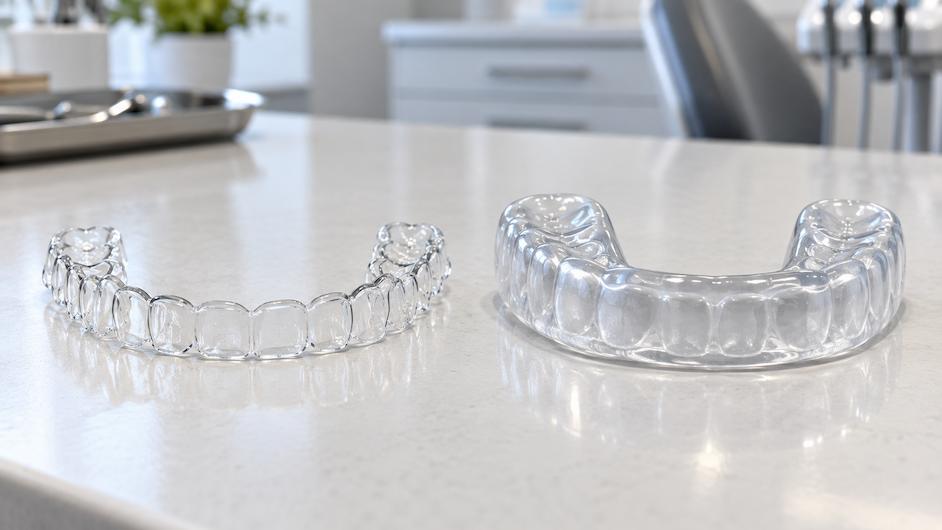
Quick answer: A retainer is primarily designed to keep teeth in their corrected positions after orthodontic treatment. A night guard is primarily designed to protect teeth from grinding and clenching forces. Although both may fit over the teeth, their materials, thickness, contact surfaces, and intended functions can differ. They are not automatically interchangeable.
| Feature | Orthodontic Retainer | Dental Night Guard |
|---|---|---|
| Primary purpose | Maintain tooth alignment after orthodontic treatment | Help protect teeth from grinding and clenching damage |
| Typical users | People who have completed braces or clear aligner treatment | People who may need protection from bruxism-related tooth damage |
| Common designs | Clear removable, Hawley, or fixed bonded retainers | Custom-fitted occlusal appliances with different materials and designs |
| Fit and bite contact | Designed primarily around maintaining tooth position | Designed with protective function and appropriate opposing-tooth contacts in mind |
| Can it protect against grinding? | May provide some separation, but protection is not assured | Designed for protection, although effectiveness depends on fit and clinical needs |
| Can it maintain alignment? | That is its intended function | Not necessarily; it should not replace prescribed retention without approval |
| Can it be worn overnight? | According to the prescribed retention schedule | According to the dentist’s instructions |
The most important distinction is not whether an appliance is transparent, removable, or worn during sleep. It is what the appliance was designed to accomplish.
A custom night guard may be made from materials selected for the patient’s needs and adjusted to provide suitable contact with the opposing teeth. A retainer follows a different design objective: helping prevent unwanted tooth movement.
Why Shouldn’t You Automatically Use a Retainer as a Night Guard?
Quick answer: A standard orthodontic retainer is not necessarily designed to withstand or distribute repeated grinding forces. Some retainers may wear, crack, distort, or lose their proper fit when exposed to bruxism. Even when a retainer creates a barrier between the teeth, that does not establish that it provides appropriate protection for your bite. A dentist should assess its suitability.
Clear retainers can resemble thin protective trays. Their appearance can make it tempting to assume they will work like a night guard, particularly if you already wear one every night.
However, protective dental appliances may need specific design features to accommodate grinding movements and contact between the upper and lower teeth. The appropriate design varies according to the clinical situation.
Three considerations are particularly important:
- Material and durability: A retainer’s material may not have been selected for repeated grinding loads. Damage can compromise the appliance’s intended function.
- Bite contacts: A retainer is not necessarily designed to manage how opposing teeth contact it during clenching or sideways jaw movement.
- Orthodontic stability: A retainer that becomes distorted or stops fitting properly may no longer maintain tooth position as intended.
These concerns do not mean every retainer will be damaged by occasional clenching. Nor do they mean that all people who grind their teeth need a separate night guard. The appropriate decision requires an assessment of the teeth, appliance, and clinical findings.
Can Teeth Grinding Damage a Retainer?
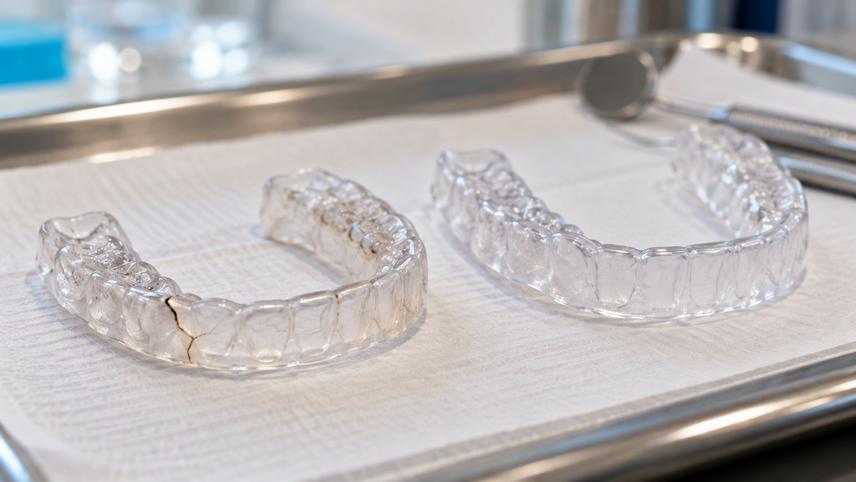
Quick answer: Yes. Repeated grinding or clenching can contribute to wear or damage in some removable retainers, particularly thin clear designs. Possible warning signs include cracks, holes, distortion, rough edges, and changes in fit. Damage alone does not confirm bruxism, but a compromised retainer should be professionally assessed before continued use.
Dental examinations can help identify signs associated with grinding, such as tooth wear and jaw muscle tenderness. Depending on the findings and symptoms, some patients may need further assessment or referral to an appropriate healthcare professional.
If your retainer develops visible damage, consider the following possibilities:
- Small cracks or holes may indicate repeated contact or mechanical wear.
- Distortion may result from heat, handling, wear, or other causes.
- A loose retainer may no longer maintain the intended fit.
- A retainer that suddenly feels tight may reflect appliance distortion, tooth movement, or another change requiring assessment.
It is important not to assume the cause from appearance alone. Appliances can also deteriorate through normal use, cleaning methods, accidental damage, and exposure to heat.
If you notice wear on your teeth, recurrent appliance breakage, or morning jaw discomfort, your dentist can investigate whether grinding is contributing. For more information about recognizing possible symptoms, read our guide to signs of nighttime teeth grinding.
What About Invisalign Retainers and Night Guards?
People who have completed Invisalign treatment may have particular concerns about changing their nighttime appliance. Retention is an important part of maintaining the tooth positions achieved during orthodontic treatment.
Can an Invisalign retainer work as a night guard?
Quick answer: A clear retainer worn after Invisalign treatment may provide some physical separation between teeth, but it is not automatically an appropriate night guard. Its suitability depends on the specific retainer, signs of grinding, fit, and bite. Patients who suspect bruxism should ask their treating dentist or orthodontist before changing appliances.
It is also important to distinguish an active Invisalign aligner from a retainer used after treatment. Active aligners are designed to move teeth through a planned sequence, while retainers are intended to help preserve the resulting alignment.
Neither should be replaced with an ordinary night guard without guidance from the clinician responsible for the orthodontic treatment.
Orthodontic retention is not simply a short-term convenience. Teeth can continue to shift after treatment, and wearing retainers as prescribed helps maintain the alignment achieved through braces or Invisalign. The recommended retention schedule varies by patient and should be discussed with the treating dentist or orthodontist.
If you have recently finished Invisalign treatment and suspect grinding, discuss both requirements together rather than choosing which appliance to discontinue yourself.
Is a Hawley retainer different from a clear retainer?
Yes. A Hawley retainer typically has an acrylic component and metal wires, while a clear removable retainer generally fits over the visible surfaces of the teeth. Both are orthodontic retention appliances, but their construction, coverage, and contact with opposing teeth can differ.
A Hawley retainer’s sturdier appearance does not automatically make it suitable for bruxism protection. Its wires and acrylic are arranged primarily to achieve orthodontic retention, and the way the opposing teeth contact the appliance matters.
Similarly, a clear retainer should not be classified as suitable or unsuitable for grinding based on thickness alone. Material, fit, design, and individual clinical requirements all matter.
Can You Wear a Night Guard Over a Retainer?
Quick answer: Do not stack a night guard over a removable retainer unless your dentist or orthodontist specifically approves that arrangement. Two appliances may not fit together correctly, and their combined thickness can change how the teeth contact. Depending on your needs, a clinician may consider a different appliance design or wearing arrangement.
Wearing both appliances at once might seem like a simple way to protect your teeth without interrupting retention. However, an appliance designed to fit directly against the teeth may no longer fit correctly over another device.
Stacking can introduce several practical concerns:
- The night guard may not seat in its intended position.
- Additional thickness may affect comfort and bite contacts.
- One appliance may place unwanted pressure on the other.
- The arrangement may interfere with the intended retention function.
- Two poorly fitting appliances can be difficult to keep clean.
This is especially important if you are considering an over-the-counter boil-and-bite guard over an existing retainer. A home-fitted guard should not be assumed to provide the appropriate fit or contact pattern.
Professional assessment is preferable to experimenting with combinations, trimming your appliances, or modifying them at home.
Who Might Need a Different Appliance or a Combined Solution?
Quick answer: Someone who needs orthodontic retention and also has clinically significant tooth grinding may need an individualized appliance plan. Possible approaches include separate appliances, a specifically designed combined-function appliance, or another professionally selected arrangement. No single design works for everyone, and a night guard should not automatically replace prescribed orthodontic retention.
The decision becomes more complicated when a patient has multiple dental considerations. These can include recent orthodontic treatment, crowns or other restorations, changes in the bite, or a history of repeatedly damaged appliances.
A dentist may need to consider how these factors interact before recommending a solution.
If you need both retention and grinding protection
The clinician may discuss whether a particular removable appliance can safely meet both objectives, whether the upper and lower arches require different arrangements, or whether separate treatment planning is more appropriate.
Some specially designed appliances may support retention while providing a protective function. However, that does not mean an ordinary night guard will preserve the alignment achieved through orthodontics.
The design must be evaluated for the individual patient, particularly when retention is critical shortly after treatment.
If you have a fixed bonded retainer
A fixed retainer is usually a wire bonded to the inner surfaces of certain teeth. Because it stays in place rather than covering the biting surfaces, it serves a different function from a removable night guard.
Some patients with fixed retainers may also be candidates for removable protective appliances. Whether those appliances fit safely around the bonded wire depends on the condition of the retainer, tooth position, and appliance design.
A fixed retainer also does not necessarily eliminate the need for additional removable retention. Follow the plan provided by your treating clinician.
If you have crowns, veneers, or other restorations
Grinding forces can affect natural teeth and dental restorations. When designing a protective appliance, the dentist may consider the condition and location of restorations, the opposing teeth, and how the bite functions.
Do not assume that a general-purpose tray offers appropriate protection simply because it covers a crown or veneer. Existing dental work should be included in the clinical assessment, especially if a restoration is loose, chipped, or repeatedly damaged.
How Does a Dentist Decide Which Appliance Is Appropriate?
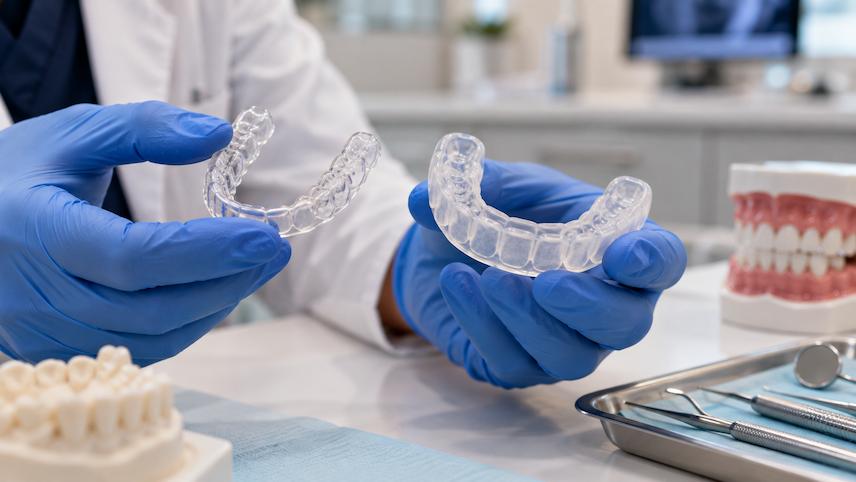
The first step is to establish what the appliance needs to achieve. Protecting teeth against possible grinding damage is different from maintaining orthodontic alignment, and both goals may need to be considered.
Depending on the concern, a dental assessment may include:
- Reviewing your history: Your dentist may ask about previous Invisalign or braces treatment, retainer instructions, appliance damage, clenching habits, and relevant symptoms.
- Examining teeth and restorations: Tooth wear, fractures, sensitivity, and existing dental work may help identify areas that require attention.
- Assessing the bite and jaw: The dentist may evaluate how your teeth meet, jaw movement, muscle tenderness, and any discomfort.
- Checking existing appliances: Bringing your current retainer or night guard allows the dentist to examine its condition and fit.
- Discussing suitable options: If an appliance is appropriate, its intended function, limitations, care instructions, and follow-up requirements can be explained.
These are general elements of clinical assessment, not a claim that every patient follows an identical appointment sequence.
Importantly, tooth wear or jaw soreness does not establish a diagnosis on its own. Other dental or medical conditions can produce similar findings.
According to the NIDCR’s expert guidance on bruxism, dental examinations can identify signs associated with grinding, while some patients may require additional assessment or referral.
A protective appliance may reduce certain consequences of grinding, but it does not necessarily eliminate the underlying activity. Nor should a guard be presented as a guaranteed treatment for headaches, sleep apnea, or temporomandibular disorders (TMD).
TMD refers to a group of conditions affecting the jaw joints, surrounding muscles, and related structures. The NIDCR guidance on TMD cautions that evidence for pain improvement with intraoral appliances is limited and advises against appliances intended to permanently change the bite as routine TMD treatment.
When Should You Ask a Dentist About Using Both Appliances?
Quick answer: Discuss both appliances if you wear a retainer and notice repeated cracks, unusual wear, morning jaw discomfort, tooth damage, or changes in fit. An assessment is particularly useful after recent orthodontic treatment because maintaining alignment remains important. Your dentist can determine whether additional protection, replacement, or another clinical approach is appropriate.
Even without noticeable discomfort, repeated damage to a retainer is worth investigating. A broken appliance can no longer be assumed to provide its intended retention function.
Arrange a dental assessment if you notice:
- A retainer that suddenly no longer fits or seats properly.
- A new crack, sharp edge, or broken component.
- A tooth that has become chipped, loose, or unusually sensitive.
- Persistent or worsening jaw pain, especially if opening or closing becomes difficult.
- A change in your bite or the way your teeth meet.
- Repeated night-guard or retainer damage despite appropriate care.
Seek prompt dental advice for a painful broken tooth, swelling, or a sudden significant change in your bite. Severe facial swelling accompanied by difficulty breathing or swallowing requires emergency medical attention.
If you have loud snoring, breathing pauses reported during sleep, or substantial daytime sleepiness, tell your dentist or healthcare provider. These symptoms may warrant assessment for sleep-related breathing disorders rather than simply choosing a different dental guard.
How Should You Care for Your Retainer or Night Guard?
Proper maintenance can help preserve appliance fit, cleanliness, and usability. The exact instructions depend on the material and design, so the guidance supplied with your appliance takes priority over general advice.
For removable appliances, useful habits include:
- Clean the appliance as instructed, using suitable methods and products for its material.
- Avoid hot water or excessive heat, which may distort some plastic appliances.
- Store it in a protective case when not in use.
- Inspect it periodically for cracks, rough areas, and visible changes in shape.
- Bring it to dental appointments when a fit or wear assessment is needed.
- Do not cut, reshape, glue, or repair a damaged appliance yourself.
Cleaning recommendations vary. Some materials can be scratched by abrasive products, while certain cleaning solutions may not be appropriate for all appliances. If you are unsure, ask your dental team before trying a new product.
Never force an appliance that no longer fits. If your retainer or night guard is cracked, has sharp edges, causes pain, or does not seat correctly, stop using the damaged appliance and contact your dentist or orthodontist promptly for advice. Do not attempt to repair or adjust it yourself. If you rely on a retainer to maintain orthodontic alignment, ask about replacement or temporary retention instructions.
Following orthodontic treatment, avoid independently changing your prescribed retention schedule because an appliance appears worn or uncomfortable. Prompt professional advice can help prevent an unnecessary interruption in retention.
Choosing the Right Protection for Your Teeth
If you already wear a retainer and are concerned about grinding, you do not need to decide between protecting your teeth and maintaining your orthodontic results on your own.
At Vancouver Stadium Community Dentist, we offer custom night guards in Downtown Vancouver. An appropriate dental assessment can help determine whether a protective appliance should be considered alongside your existing retention needs.
Bring your current appliances and any orthodontic instructions to your appointment so they can be considered in the discussion.
Contact Vancouver Stadium Community Dentist to book a dental assessment and discuss your concerns about nighttime grinding and appliance fit.
This article is intended for general educational information and does not replace an individualized dental examination, diagnosis, or treatment recommendation.