

Most people who grind their teeth at night have no idea they are doing it. Bruxism, the medical name for nighttime teeth grinding and clenching, happens during sleep. The only clues you get are the ones your body leaves behind in the morning: a dull headache, a sore jaw, a chipped tooth.
Waking up with morning jaw pain in Vancouver? You are not alone. Long commutes through Downtown Vancouver, demanding work, late-evening screens, and everyday stress all play a role. The good news is that teeth grinding is very treatable, and a custom night guard from your Vancouver dentist can protect your smile while you sleep.
What is bruxism, exactly?
Bruxism is the involuntary grinding, gnashing, or clenching of teeth. It can happen during the day or at night. Sleep bruxism is the more common and damaging form because the forces involved are far stronger than normal chewing.
During sleep, the brain partly disables the natural feedback that tells you to ease off when you bite too hard. Some people grind with up to ten times the pressure of normal chewing, sometimes for several minutes at a time, and never wake up.
10 signs you might be grinding your teeth
1. A sore or tired jaw in the morning
Jaw muscles feel tight, achy, or fatigued, almost as if you spent the night chewing gum. Some people describe it as a dull ache in front of the ears or along the lower jawline.
2. Headaches that start at the temples
Tension headaches that begin in the temples or behind the eyes, especially first thing in the morning, are often linked to overworked jaw muscles.
3. Worn, flat, or chipped teeth
Look at your front teeth in the mirror. Are the edges flat instead of slightly rounded? Are your canines blunt? Are there small chips on the edges? These are classic signs of long-term grinding wear.
4. Tooth sensitivity to hot, cold, or sweet
When grinding wears away enamel, the softer dentin underneath becomes exposed. Cold drinks or sweets can suddenly feel sharp. Sensitivity that appears gradually across many teeth often points to enamel wear from clenching.
5. Indentations on the sides of your tongue
Wavy, scalloped indentations along the side of the tongue can mean you are pressing it forcefully against your teeth at night, often together with clenching.
6. Cracked or loose fillings, crowns, or veneers
Heavy nighttime grinding can fracture restorations that would otherwise last for years. Patients with dental crowns or dental veneers often benefit most from protection at night. If a sudden crack causes sharp pain, contact us for emergency dentistry.
7. Clicking or popping in the jaw joint
The temporomandibular joint, or TMJ, sits in front of your ear. Clicking or a feeling of catching when you open your mouth can mean the joint is overloaded by clenching.
8. Earaches without an ear infection
The jaw joint sits close to the ear canal, so jaw muscle tension can feel like an earache. Persistent ear pressure with no infection should be checked.
9. Disrupted or light sleep
Brief muscle contractions during grinding can fragment your rest. A sleeping partner may also notice the grinding sound itself.
10. Receding gums and notches at the gumline
Forces from clenching travel through the tooth and concentrate at the gumline. Over years, this can cause small wedge-shaped notches and contribute to gum recession.
Why do people grind their teeth at night?
Bruxism rarely has a single cause. The most common contributors are stress and anxiety, sleep disorders like snoring and sleep apnea, bite or alignment issues, caffeine, alcohol and tobacco, certain medications such as some antidepressants, and developmental changes in children during their changeover to adult teeth.
What happens if you ignore nighttime grinding?
Mild, occasional grinding may have minimal consequences. Persistent grinding is a different story. Over time, you can expect to see flattened or shortened teeth, repeated chips and cracks, sensitivity, repeated failure of fillings and crowns, jaw pain, headaches, TMJ problems, and gum recession.
Book a visit with a Vancouver dentist if you have ongoing morning jaw pain or headaches, visible wear or chipping, worsening sensitivity, jaw clicking, loud grinding noticed by a partner, or fillings and crowns that keep cracking.
How a dentist diagnoses bruxism
You do not need a sleep lab to identify most cases. A careful clinical exam at your regular dental checkup usually does the job. Your dentist examines your teeth for wear patterns, checks for chips and cracks, feels the jaw muscles and TMJ, assesses your bite, and asks about headaches, snoring, and sleep quality.
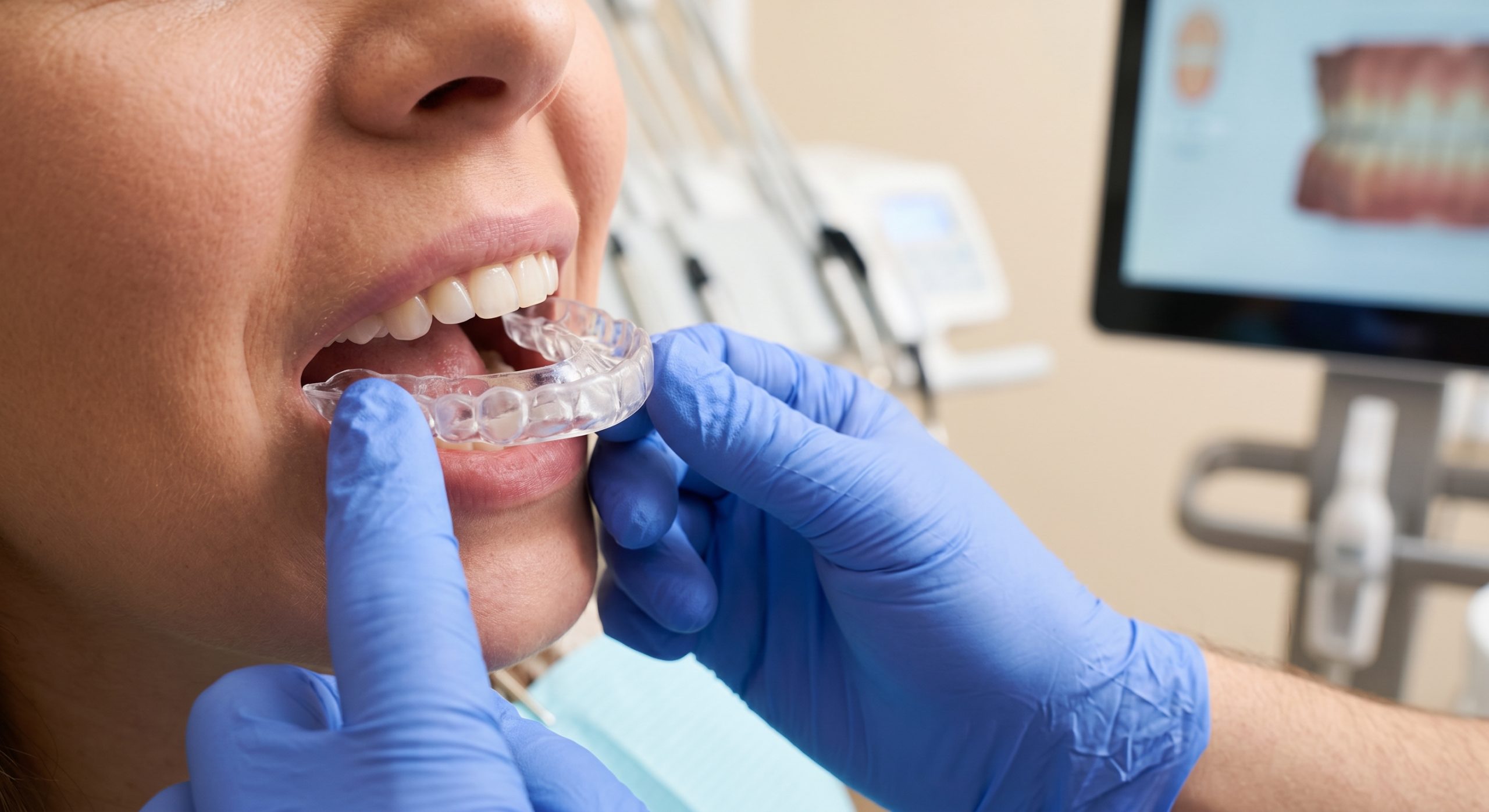
How a custom night guard protects your teeth
A night guard is a thin appliance worn over your teeth at night. It places a protective layer between upper and lower teeth so clenching forces are absorbed by the appliance instead of your enamel. It also distributes biting forces across the entire arch and helps relax the jaw muscles.
The key word is custom. Drugstore boil-and-bite guards are bulky, fit poorly, and often fall out at night. A professional appliance is fitted to your exact bite. Learn more on our custom night guards page.
What to expect when you get a custom night guard
The process usually takes two visits. At the first visit, we examine your teeth and bite, then take digital scans or impressions. At the second visit, we check the fit of the finished guard, adjust the bite, and show you how to wear and care for it. Most patients adapt within a few nights, and with proper care, a quality night guard lasts several years.
Caring for your night guard
Rinse with cool water after each use and brush gently with a soft toothbrush (skip toothpaste, which can be abrasive). Once a week, soak in a denture cleaner. Keep it in its ventilated case, away from heat and sunlight. Bring it to your cleaning appointments so we can inspect it for wear.
Other things you can do to reduce grinding
A night guard protects your teeth but does not stop the grinding itself. Pair it with simple habit changes: wind down without screens 30 to 60 minutes before bed, limit caffeine after early afternoon, reduce evening alcohol, try a short stretching or breathing routine before sleep, and practice “lips together, teeth apart” during the day. If snoring or apnea is suspected, ask about a sleep evaluation.
Stop morning jaw pain in Vancouver
If you wake up with jaw soreness, headaches, or chipped teeth, book a custom night guard consultation with our Downtown Vancouver dentist today.
Frequently asked questions
How do I know if I grind my teeth at night?
Common signs of nighttime teeth grinding include morning jaw soreness, temple headaches, flat or chipped front teeth, tooth sensitivity to cold or sweet, and clicking in the jaw joint. A partner may also hear the grinding.
Can a night guard stop teeth grinding?
A night guard does not stop the grinding itself, but it absorbs the force and protects your teeth, fillings, and crowns from wear and damage caused by bruxism.
Are custom night guards better than drugstore guards?
Yes. Drugstore boil-and-bite guards are bulky, fit poorly, and often fall out at night. A custom night guard made by your Vancouver dentist is fitted to your exact bite, more comfortable, and protects more reliably.
How much does a custom night guard cost in Vancouver?
The cost depends on materials and complexity. Most dental insurance plans cover part of the cost when grinding is causing damage. Contact our Downtown Vancouver clinic for a transparent quote and direct billing options.
How long does a custom night guard last?
With proper care, a quality custom night guard typically lasts 3 to 5 years. Heavy grinders may need a replacement sooner.
When should I see a dentist in Vancouver for jaw pain?
Book a visit if you have ongoing morning jaw pain, headaches, jaw clicking, repeated cracked fillings, or noticeable wear on your teeth. Severe pain or a sudden cracked tooth needs same-day emergency dental care.
This article is for general information only and does not replace a dental exam. If you have ongoing pain, a cracked tooth, or sudden jaw symptoms, please contact a dental professional.