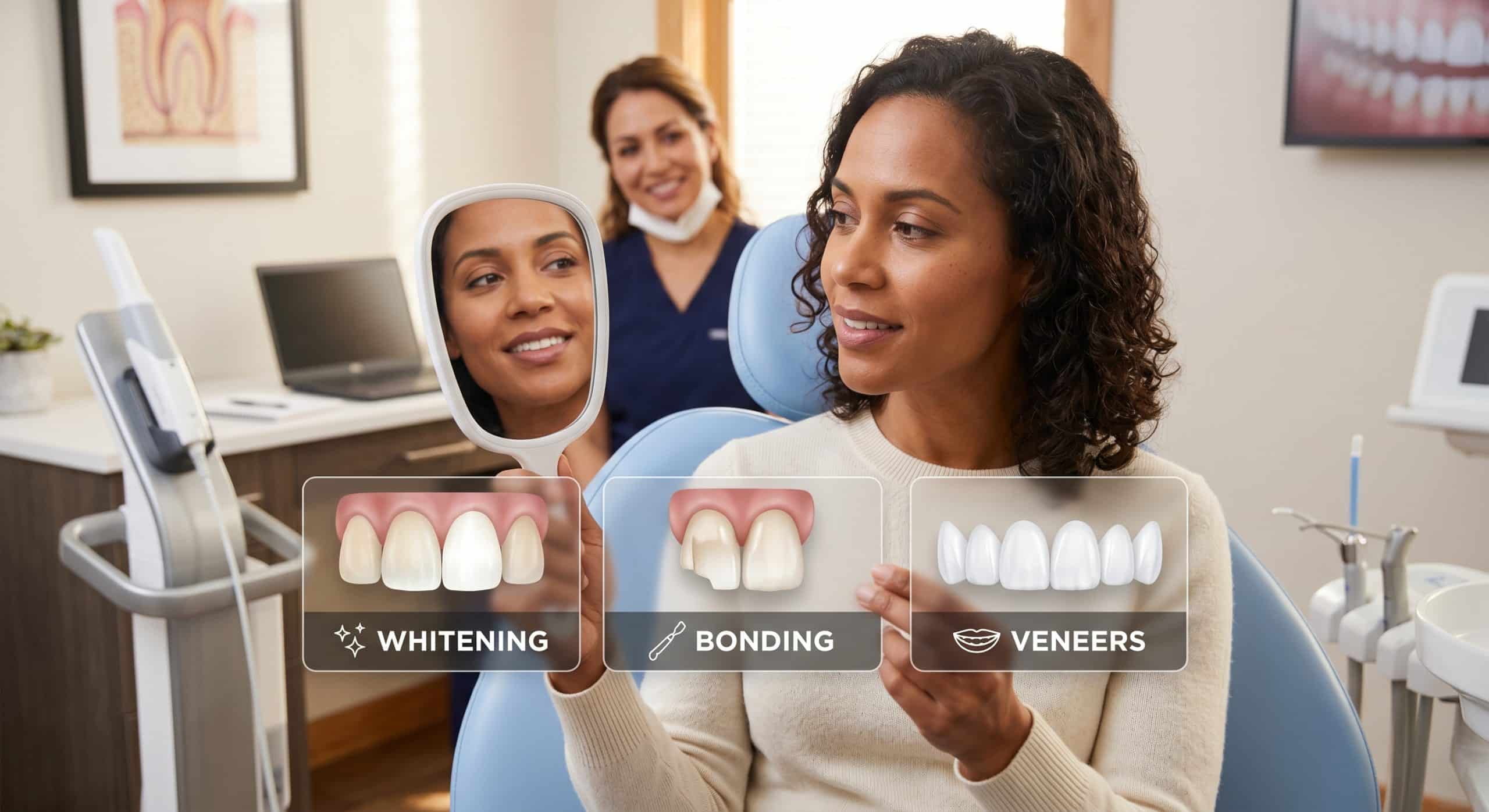
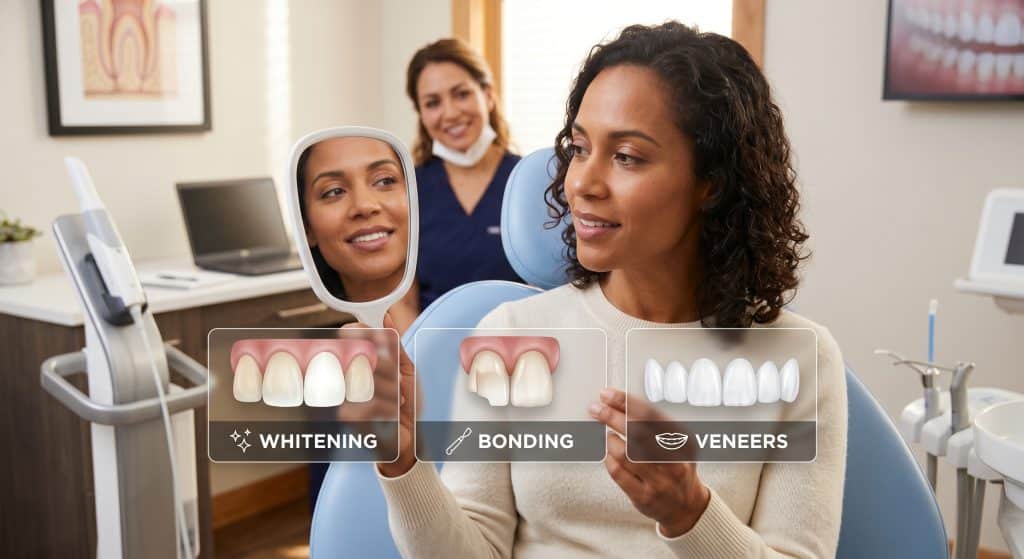
If you are thinking about upgrading your smile in Vancouver, three options usually come up: whitening, bonding, and veneers. They sound similar, but each one solves a different problem. The right choice depends on what you want to change, how durable you need it to be, and what you are comfortable spending.
This guide compares all three side by side so you can walk into a consultation knowing exactly which questions to ask.
At-a-glance comparison
| Feature | Whitening | Bonding | Veneers |
|---|---|---|---|
| Best for | Yellow or stained teeth | Small chips, gaps, minor shape issues | Multiple cosmetic concerns at once |
| Changes shape | No | Yes, modestly | Yes, significantly |
| Tooth structure removed | None | Little to none | Some, depending on type |
| Number of visits | 1 to 2 | 1 | 2 to 3 |
| Typical lifespan | Months to a few years | 4 to 8 years | 10 to 15+ years |
| Reversible | Yes | Mostly | Generally not |
| Relative cost | Lower | Middle | Higher |
Option 1: Teeth whitening
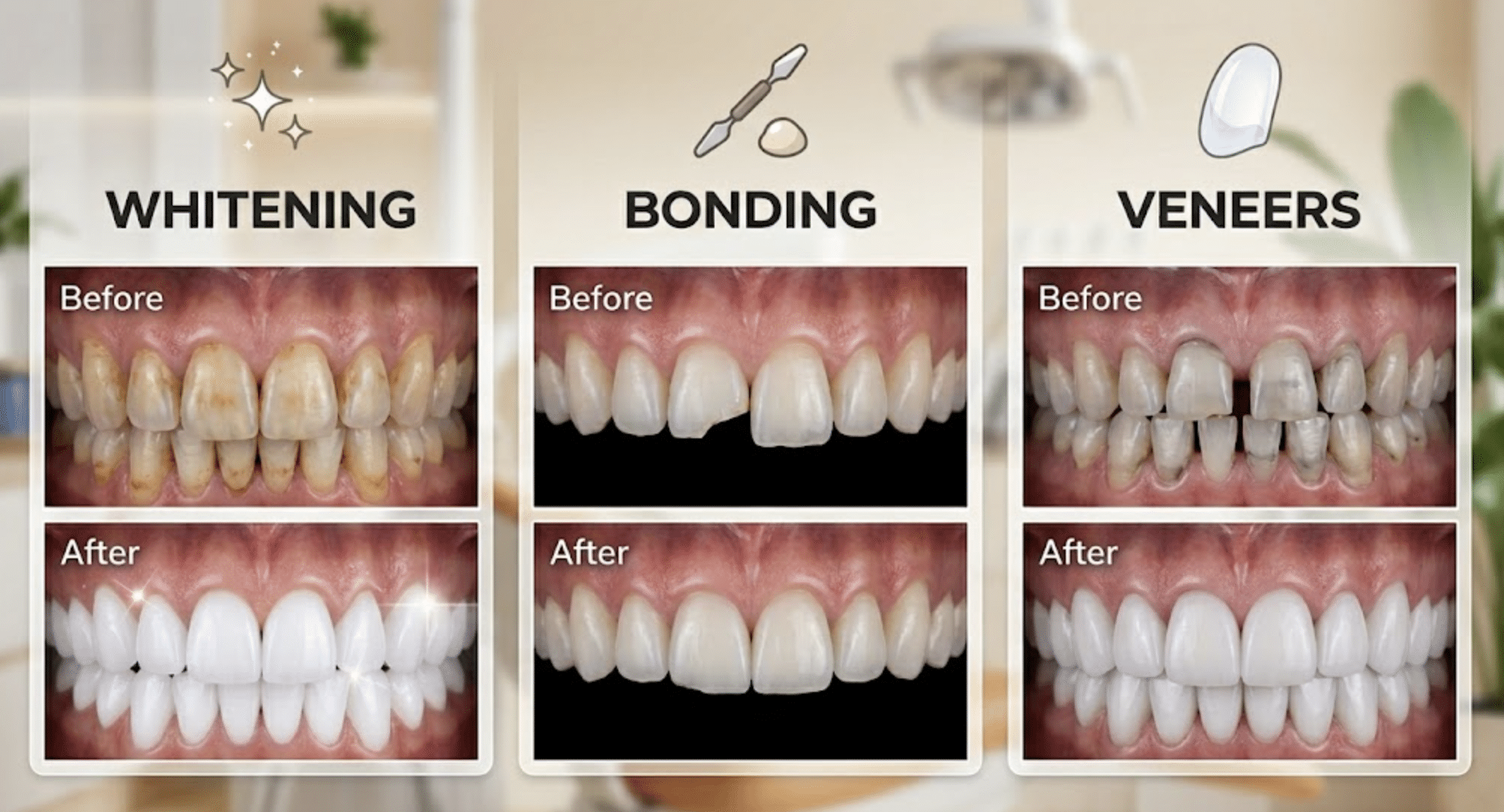
Professional teeth whitening uses a peroxide-based gel to lift surface and deeper stains from natural teeth. It is the most conservative cosmetic option because it does not change the shape of your teeth and removes no tooth structure.
Pros
- Conservative, no shape change
- Most affordable option
- Quick visible results
- Reversible if not maintained
Cons
- Does not work on grey or “tetracycline” stains
- Does not change shape, size, or position
- Does not whiten fillings, crowns, or veneers
- Temporary sensitivity is common
Whitening works best when your teeth are otherwise in good shape. A professional cleaning before or as part of the process can also remove surface stains, which is why a checkup and a hygiene cleaning is often recommended first.
Option 2: Dental bonding
Bonding uses a tooth-coloured composite resin that your dentist sculpts directly onto your tooth, then hardens with a curing light. It is artistic and quick, and it is one of the most reversible repair options available.
Pros
- Often little to no tooth removal
- Single visit results
- More affordable than veneers
- Easy to repair or adjust
Cons
- Stains over time with coffee, tea, wine
- Less durable than porcelain
- Can chip if you bite hard objects
- Not ideal for full-smile makeovers
Bonding is excellent for problems like a chipped front corner, a small gap between two teeth, or a tooth that looks slightly shorter than the others. It is also a great way to test a small shape change before committing to something more permanent.
Option 3: Porcelain veneers
Dental veneers are thin custom shells that cover the front of a tooth. Most are made from porcelain in a lab, although composite veneers built up directly in the mouth are another option. Veneers can change the colour, shape, size, and alignment of teeth at the same time.
Pros
- Long-lasting and very stain-resistant in porcelain
- Corrects shape, size, and shade together
- Custom-made to suit your face and smile
- Looks and feels like natural teeth
Cons
- Some tooth structure is usually removed
- Generally not reversible
- Higher cost than whitening or bonding
- If a veneer chips, it usually needs full replacement
If you are exploring a smile makeover and want to address shade, shape, and small alignment issues all at once, veneers are often the most complete answer.
How to choose between them
The simplest way to decide is to start with the problem you want to fix.
If the only issue is colour
Start with whitening. It is the most conservative, the most affordable, and you can always escalate later if you want more change. Make sure your teeth are healthy first, since whitening over decay or near a leaking filling can cause sensitivity and uneven results.
If you have a small chip, short tooth, or single small gap
Bonding is usually the right call. It is fast, conservative, and easy to revise. If you are unsure how a small shape change will look, bonding is a safer first step than veneers.
If you have multiple concerns or want a “new smile”
Veneers tend to be the best fit when shade, shape, size, and minor alignment all need to change together. They are an investment, but the result is generally the most consistent and longest-lasting.
If your goal is mostly straighter teeth
Veneers can mask mild crookedness, but if alignment is the main issue, ask whether Invisalign clear aligners would give a healthier long-term result. Veneers are best for cosmetic fine-tuning, not for replacing orthodontic treatment.
Combining treatments and what to expect
Combining the three options
It is common to combine these options. Many patients whiten first, then add bonding or veneers to bring outlier teeth in line with the new shade. The reason is simple: bonding and veneers are matched to the colour of your other teeth at the time they are placed, so it makes sense to whiten first if a brighter result matters to you. Your dentist will recommend a wait time after whitening before colour-matching new bonding or veneers.
What to expect at a cosmetic consultation
A good cosmetic consultation is part conversation, part exam. Expect:
- A discussion about what bothers you and what you want to change
- A clinical exam to check the health of your teeth, gums, and bite
- Photos and sometimes digital scans
- An honest review of which options would and would not work for you
- A clear quote and timeline before any treatment is booked
If something is not the right fit, your dentist should tell you. The goal is a result that looks great and stays healthy for years, not just at the reveal.
Cost: how to think about it
Exact pricing depends on the case, but the order is fairly consistent: whitening is the most affordable, bonding sits in the middle, and veneers are the largest investment. The lifespan also tends to follow the price, so cost per year often evens out more than the upfront numbers suggest. Most insurance plans treat purely cosmetic work as not covered. Bonding is sometimes partially covered if it is needed to repair a chipped or damaged tooth.
Before any cosmetic treatment
Address these issues first
See a dentist before any cosmetic work if you have ongoing tooth sensitivity or pain, gums that bleed easily or look red and swollen, a chip or crack, a tooth that has darkened, grinding or clenching habits, or you have not had a dental checkup in over a year. These issues are best addressed first, otherwise the result may not last.
Care after cosmetic treatment
Each option has its own maintenance, but the basics are similar: brush twice a day and floss daily, limit coffee, tea, red wine, and tobacco, keep up with regular cleanings and exams, and ask about a night guard if you grind or clench. Plan for periodic touch-ups for bonding and occasional whitening top-ups to maintain the shade.
Why patients trust us with cosmetic decisions
We start by asking what bothers you, not by selling a treatment. Our Downtown Vancouver team reviews the health of your teeth and gums first, shows you what each option would actually look like for your case, and explains the trade-offs in plain language so you can decide with confidence.
Our clinic offers transparent fees, direct billing with most insurance providers, CDCP support where eligible, and sedation options for patients who feel anxious about cosmetic visits.
Not sure which one is right for you?
Book a cosmetic consultation with our Downtown Vancouver team. We will look at your teeth, listen to what you want to change, and give you a clear, honest recommendation.
Frequently asked questions
Which is cheapest: whitening, bonding, or veneers?
In general, professional whitening is the most affordable option, bonding sits in the middle, and veneers are the most significant investment. Costs vary based on how many teeth are involved and the materials used. A consultation gives you an accurate quote for your specific case.
Can I whiten my teeth before getting bonding or veneers?
Yes, and many patients do. Bonding and veneers are made to match your tooth shade at the time they are placed, so it makes sense to whiten first if you want a brighter result. Your dentist will recommend a wait time before final shade matching.
How long does each cosmetic option last?
Whitening lasts several months to a few years with maintenance. Bonding lasts about 4 to 8 years before touch-ups. Porcelain veneers can last 10 to 15 years or more with good care.
Will whitening damage my teeth?
Professional whitening is safe when done under a dentist’s care. Temporary sensitivity is common but usually fades within a few days. Whitening does not remove tooth structure and does not weaken healthy teeth.
Are veneers reversible?
Most veneers are not reversible because a small amount of enamel is typically removed to fit them. Minimal-prep and no-prep veneers exist for some cases and remove little to no enamel. Your Vancouver dentist will explain which type fits your teeth.
Can bonding fix gaps between teeth?
Yes. Small gaps can often be closed with composite bonding in a single visit. Larger gaps or multiple gaps may be better treated with Invisalign or veneers. A Vancouver dentist can tell you which option will look most natural.
This article is for general information only and does not replace personal advice from your dentist. Cosmetic outcomes vary by case. A clinical exam is the most reliable way to choose the right option for you.