

Seeing blood in the sink after brushing your teeth can be worrying. Some people ignore it and assume it is normal. Others panic and fear the worst right away. In reality, bleeding gums are common, but they should never be brushed off as something that does not matter.
Your gums are not supposed to bleed regularly. If they do, your mouth may be telling you that something needs attention. In many cases, the cause is relatively straightforward: plaque buildup along the gumline, gum irritation from inconsistent flossing, or brushing too hard without realizing it. Sometimes the issue is mild and easy to improve. Sometimes it is an early sign of a bigger gum problem that is much easier to manage when caught sooner.
If you live or work in Downtown Vancouver and have started noticing blood while brushing or flossing, it helps to understand what might be going on before the problem gets worse.
The most common reason gums bleed
The most common reason gums bleed is inflammation caused by plaque buildup. Plaque is a sticky layer of bacteria that forms on the teeth every day. When it stays around the gumline for too long, it can irritate the soft tissue. The gums may become red, puffy, tender, or more likely to bleed during brushing and flossing.
This early stage of gum irritation is often the first sign that the area is not being cleaned as well as it needs to be. That does not mean you have done something terrible. It usually means your current routine needs adjustment, or that there is buildup in places that are hard to reach at home.
That is one reason regular hygiene cleanings matter. They help remove plaque and hardened deposits that a toothbrush cannot fully remove once they have built up.
Bleeding gums are common, but not normal
A lot of people say, “My gums always bleed a bit,” as though it is just how their mouth works. It is understandable why they think that, especially if it has happened for years. But healthy gums should not bleed often.
Occasional irritation can happen. For example, someone may floss after a long break and see a small amount of blood. That can happen because the gums are already inflamed. But if bleeding keeps returning, it is a sign worth paying attention to.
The important thing is not just whether the gums bleed once. It is whether it happens regularly, whether the bleeding is tied to tenderness or swelling, and whether the issue seems to be improving or getting worse.
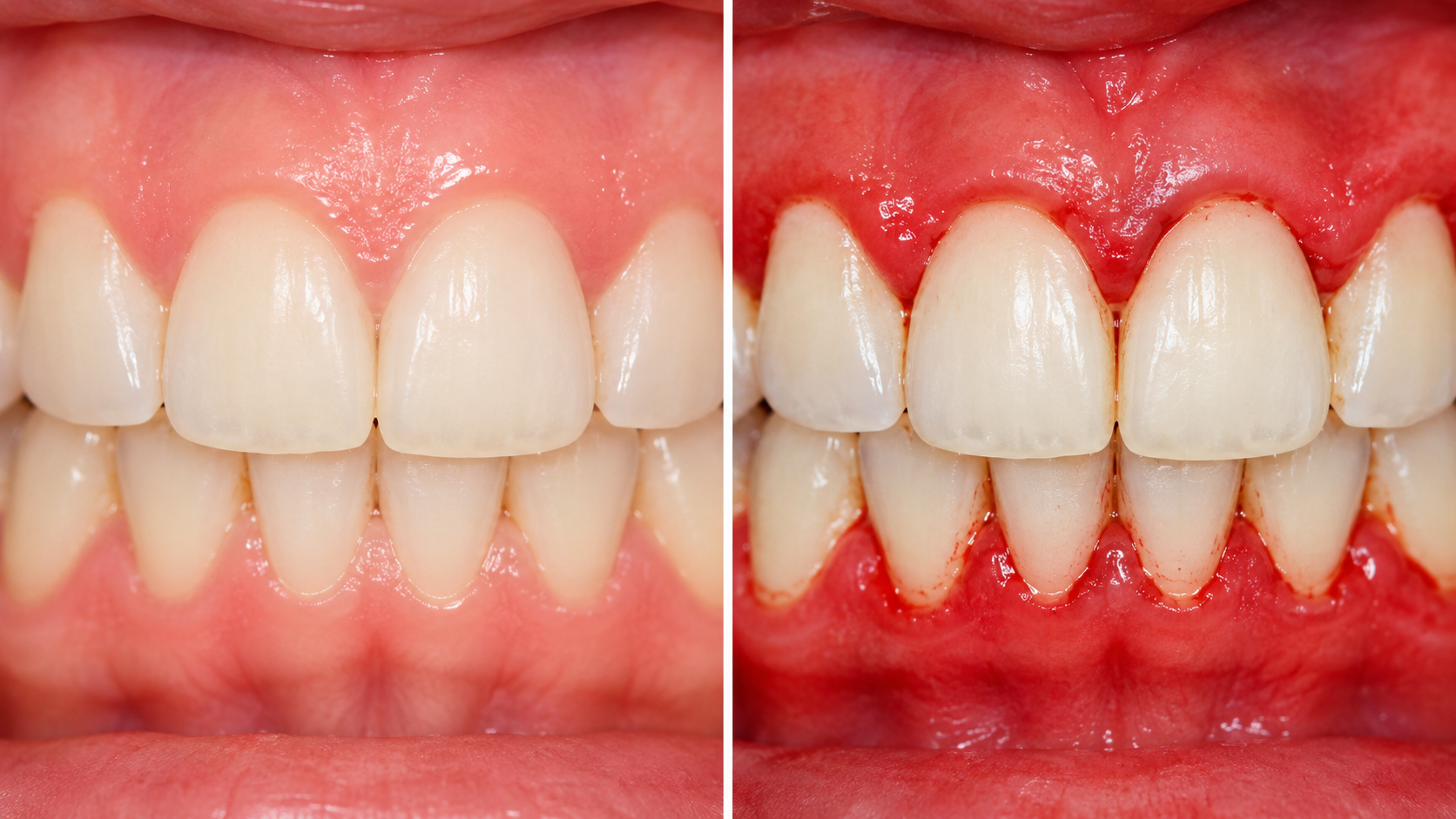
Other reasons your gums may bleed
Although plaque and inflammation are the most common causes, they are not the only possibilities.
1. Brushing too hard
Some people think firm scrubbing means a better clean. In reality, aggressive brushing can irritate the gums and even wear down tooth surfaces over time. If your toothbrush bristles flatten quickly or your gums feel sore after brushing, pressure may be part of the problem. A soft-bristled brush and a gentle technique are usually much better than scrubbing hard.
2. Inconsistent flossing
If you only floss once in a while, the gums between the teeth may stay irritated. When you finally floss, they can bleed more easily. That does not mean flossing is hurting you. It often means the tissue is already inflamed and reacts as soon as it is disturbed. The answer is not to stop flossing. It is usually to floss gently and consistently.
3. Tartar buildup
When plaque is left on the teeth too long, it can harden into tartar. Once that happens, it cannot be brushed away at home. Tartar around the gumline makes it easier for bacteria to stay in place and continue irritating the gums. This is one of the most common reasons home brushing alone does not solve the problem.
4. A problem concentrated in one area
Sometimes a patient notices that the gums do not bleed everywhere. Instead, one spot bleeds every time they brush or floss. This may happen because food gets trapped there more easily, because the area is harder to clean, or because something local is irritating the gum. When one area keeps bleeding again and again, it is worth having it looked at.
5. Dry mouth and mouth breathing
A dry mouth can make oral tissues more vulnerable to irritation. Some people breathe through their mouth at night or take medications that leave the mouth feeling dry. While dry mouth is not always the direct cause, it can make gum health harder to maintain.
When bleeding gums may point to gum disease
Bleeding gums do not always mean serious gum disease, but they can be an early sign of it. When inflammation is left untreated, it can go beyond mild irritation. The gum tissue may begin to pull away from the teeth. Deeper areas may become harder to keep clean. Over time, the problem can become more difficult to reverse and more expensive to manage.
That is why early action matters. Many patients assume they should wait until pain appears, but gum issues are often quieter than that. Bleeding is often one of the first clear signals.
It is smart to book a dental checkup if your gums:
- bleed often
- look swollen or darker red than usual
- feel tender
- seem to be receding
- are paired with ongoing bad breath
- bleed in the same place repeatedly
- bleed even when you are not brushing
What you can do at home right away
If your gums have started bleeding, a few small changes may help while you arrange a dental visit.
Use a soft toothbrush
Choose a soft-bristled toothbrush and focus on being thorough rather than forceful.
Slow down when you brush
Rushing often means you miss the gumline, which is exactly where plaque tends to collect. Slow, careful brushing is more effective than brushing harder.
Floss gently every day
If flossing has been inconsistent, start gently and keep going. Mild bleeding from inflamed gums may improve as the area becomes cleaner.
Pay attention to patterns
Does the bleeding happen everywhere, or in one spot? Does it happen only at night? Is it getting better or worse? These details can be helpful when discussing symptoms with a dental team.
Why a professional cleaning can make such a difference
Many people wait until something hurts before they book dental care. Gum problems often do not work that way. They can build slowly and quietly, then become obvious only once the inflammation is more established.
A professional cleaning helps remove plaque and tartar from areas that are difficult to manage at home. It also gives the dental team a chance to check whether the bleeding is simply related to buildup or whether something more advanced may be happening.
If it has been a while since your last visit, combining hygiene cleanings with a dental checkup is often the most sensible next step. It gives you both the cleaning support and the assessment needed to understand what is really going on.
What happens if you ignore bleeding gums?
Bleeding gums may stay mild for a while, which is one reason people put them off. But ignoring the issue can allow the inflammation to continue. Over time, that may lead to more sensitivity, stronger odour, gum recession, or more complicated treatment needs. Even if the current problem seems small, it is usually easier to deal with earlier rather than later.
Ignoring bleeding does not make it go away. It usually just delays the moment when you get a proper answer.
Is it ever urgent?
Bleeding gums are not usually a dental emergency on their own. But it becomes more important to get checked quickly if the bleeding is heavy, happens on its own, or comes with major swelling, pus, severe pain, or a loose tooth. Most of the time, it is not an emergency. It is simply a clear sign that your gums need attention.
What a dental visit for bleeding gums usually involves
If you come in because your gums bleed, the visit is usually very straightforward. The team will ask how often it happens, whether it is all over or limited to one area, and whether you have noticed swelling, tenderness, bad breath, or gum recession.
Your dentist may examine the gums, look for buildup, and assess whether there are signs of deeper gum concerns. In many cases, patients feel relieved after the visit because they finally know what is causing the problem and what the next step should be.
A simple takeaway
Bleeding gums are common, but they should not be treated as normal. In many cases, the cause is manageable. But the longer you ignore it, the more likely it is that the inflammation will continue. That is why it is worth taking the sign seriously, even if there is no pain yet.
Stop ignoring bleeding gums in Vancouver
If your gums bleed when you brush or floss, book a dental checkup and cleaning with our Downtown Vancouver team today.
Frequently asked questions
Why do my gums bleed when I brush?
The most common reason gums bleed is inflammation caused by plaque buildup along the gumline. Brushing too hard, inconsistent flossing, tartar buildup, and dry mouth can also contribute. Regular bleeding is a sign worth checking with a dentist.
Are bleeding gums normal?
Bleeding gums are common but they are not normal. Healthy gums should not bleed regularly. If your gums bleed often, swell, feel tender, or recede, see a Vancouver dentist for a checkup.
Should I stop flossing if my gums bleed?
No. If your gums bleed when you start flossing again after a break, the tissue is likely already inflamed. Continue flossing gently and consistently. The bleeding should improve as the area becomes cleaner. If it does not, book a dental checkup.
Can bleeding gums lead to gum disease?
Yes. Bleeding gums can be an early sign of gum disease. Untreated inflammation can progress to deeper gum problems, gum recession, and eventually periodontitis. Early action makes treatment much easier and less costly.
When should I see a Vancouver dentist for bleeding gums?
Book a visit if your gums bleed often, look swollen or dark red, feel tender, seem to recede, are paired with ongoing bad breath, bleed in the same place repeatedly, or bleed even when you are not brushing.
Is bleeding gums a dental emergency?
Usually no. But seek urgent care if the bleeding is heavy, happens on its own, or comes with major swelling, pus, severe pain, or a loose tooth. Otherwise, it is a clear sign your gums need attention soon.
This article is for general information only and does not replace a dental exam. If you have ongoing bleeding, pain, or swelling, please contact a dental professional.